
San Diego Government Contract Fraud Lawyer & Defense Contractor Fraud Law Firm
San Diego Government Contract Fraud Lawyers for Contractors and Executives Under Federal Investigation

How serious is this? Can we keep our contracts? Am I personally exposed? What should we do — and not do — today?
Those questions have answers, and the first days are when you have the most room to shape them. Watson & Associates defends companies, CEOs and managers in federal government contract fraud matters, from the first government contact through civil settlement or a criminal case in the Southern District of California.
- Former Assistant U.S. Attorney, Major Frauds Section — U.S. Attorney’s Office, Southern District of California
- Former federal contracting officer and former DoD procurement official
- Former senior attorney, U.S. Small Business Administration
- Civil False Claims Act and criminal defense coordinated by one team
Speak with a federal defense attorney: 1.866.601.5518
Confidential · Available 24/7 · No obligation
California Offices — by appointment only: Los Angeles, California 1800 Vine St, Los Angeles, CA 90028 and 402 West Broadway, Suite #400, San Diego, California 92101. We do not accept mail or service at this location.
Download the CID Response Checklist (PDF)
If something arrived today: don’t call the contracting officer to explain, don’t let employees sit for interviews, and don’t delete or “clean up” anything until you have spoken with counsel.
Meetings in San Diego by appointment at 402 West Broadway, Suite 400. We do not accept mail or service at this location.
Where are you right now?
- “Nothing has arrived, but agents called or an employee was interviewed.” → What to do in the first 72 hours
- “We received a Civil Investigative Demand.” → Phase 1: The DOJ Civil Investigative Demand
- “DOJ wants to discuss resolution, or a qui tam complaint was unsealed.” → Phase 2: Negotiation and settlement
- “I received a target letter, grand jury subpoena, search warrant, or indictment.” → Phase 3: Indictment and federal charges
- “We received a suspension or proposed debarment notice.” → Suspension and debarment
What to do in the first 72 hours of a federal contract fraud investigation
Three things matter most in the first three days: stop informal conversations with the government, preserve every record, and identify who needs separate counsel. Most avoidable damage in these cases happens in this window, before a lawyer is involved.
- Pause the explanations. Well-meant conversations with the contracting officer, the COR or agents become evidence. An inaccurate answer to an agent can be its own crime under 18 U.S.C. § 1001.
- Preserve everything. Suspend auto-delete and routine purges. Deleting after notice turns a defensible case into an obstruction problem.
- Find out your status. Target, subject and witness carry very different risks, and that status can change.
- Separate the company’s interests from individuals’. Company counsel represents the company. Executives with personal exposure may need their own lawyer — the government notices who was represented, and when.
- Don’t self-report yet. The FAR mandatory disclosure rule is real, but disclosing before you understand the facts can create the case against you.
The right sequence for your situation depends on what the government already has. That is the first thing we work to find out.
Call 1.866.601.5518 — or download the CID Response Checklist.
Government contract fraud enforcement in San Diego is active
If you’re wondering whether these cases really happen here: they do, and they are moving through the federal courthouse in San Diego now. The Southern District of California covers one of the country’s heaviest concentrations of Navy, Marine Corps and defense-technology contracting, and its prosecutors work these cases with DCIS, NCIS, SBA-OIG and IRS-CI.
Recent examples from public Justice Department announcements:
- Naval Information Warfare Center (NIWC) bribery investigation. A former NIWC official was sentenced to 72 months in September 2026 for accepting bribes from defense contractors that won hundreds of millions of dollars in contracts. A contractor’s CEO received 48 months in January 2026; his plea also described marketing his company’s 8(a) status to non-8(a) contractors for a 6–8% pass-through fee. Another contractor was fined $2.25 million, its executive was sentenced to 18 months, and a third company and a San Diego executive were indicted.
- A whistleblower case from inside a San Diego manufacturer. A local tungsten products company paid $5.6 million to resolve False Claims Act allegations over domestic-sourcing certifications — a case started by a former employee and a competitor.
- One set of facts, two cases. A Santee contractor and its owner were convicted at trial over SDVOSB set-aside contracts and separately settled the civil False Claims Act case arising from the same conduct.
What this means for you: most cases begin with an employee, former employee, competitor or teaming partner, and the complaint stays sealed while the government investigates. “Nothing has arrived” does not always mean nothing is happening.
Phase 1: The DOJ Civil Investigative Demand (CID)
 A Civil Investigative Demand is a compulsory demand under 31 U.S.C. § 3733 that the Justice Department uses to investigate possible False Claims Act liability before deciding whether to sue. In San Diego it usually comes from the Civil Division of the U.S. Attorney’s Office, often with DOJ’s Civil Fraud Section, and it frequently means a qui tam complaint is pending under seal.
What a CID can require
- Documents: contracts, modifications, invoices, cost and pricing data, certifications, internal email
- Written answers to interrogatories, signed under oath
- Sworn oral testimony from you or your employees
What you need to know right now
- The return date is real, but scope and timing are often negotiable — through counsel, before the deadline, not after it.
- What you produce can reach criminal prosecutors. Civil and criminal teams can share information. A CID response is also a criminal-risk decision.
- The CID itself is evidence of the government’s theory. The contracts, time period and custodians named often point to the allegation and, sometimes, to who raised it.
- Sworn testimony is not a conversation. No employee should sit for a CID deposition unprepared or unrepresented.
How we handle the CID stage
We read the demand for what it reveals, negotiate scope, custodians and date ranges, protect privilege, and rebuild the contract file under privilege with a former contracting officer, so we understand your facts before the government characterizes them. Where it serves you, we begin building the case for why the government should not intervene, or should narrow its theory, while the complaint is still sealed — the period when a contractor usually has the most influence.
Received a CID? Call 1.866.601.5518 or get the CID Response Checklist — what to preserve, who to notify internally, and the mistakes that expand an investigation.
Phase 2: Negotiation and settlement of a False Claims Act case
Most contractor False Claims Act matters end in a negotiated resolution rather than a trial, but the terms are set long before a number is discussed — by how well the government’s theory of falsity, materiality and damages has been challenged. Negotiation starts at the CID stage, not at the end.
What drives the government’s number
- Treble damages plus per-claim penalties. Current civil penalties are $14,308 to $28,619 per false claim, and every invoice or payment request can count as a claim. A contract billed monthly for five years can mean 60 claims before damages are calculated.
- How “damages” are measured. In small-business eligibility cases, SBA regulations presume the government’s loss equals the full amount paid on the contract — not the profit, the whole value.
- Cooperation and disclosure. DOJ policy credits timely disclosure, cooperation and remediation, and the statute allows double rather than treble damages in narrow circumstances. Whether and how to pursue that credit is a strategic decision with risks on both sides.
- Ability to pay. DOJ will consider a documented inability to pay, which can matter for closely held contractors.
Terms that matter as much as the dollar amount
- What conduct, time period and parties the release covers — and what it doesn’t (a civil settlement does not automatically resolve criminal exposure)
- Admission language; DOJ settlement announcements commonly state the claims are allegations only, with no determination of liability
- The whistleblower’s share, attorney’s fees and any retaliation claim under 31 U.S.C. § 3730(h)
- Coordination with the agency’s suspension and debarment official, so the settlement doesn’t trigger exclusion
- Compliance commitments you can live with
Our team includes former DOJ prosecutors who have sat on the government’s side of these negotiations and a former contracting officer who can explain to an AUSA, in procurement terms, why a contract requirement was ambiguous or a cost was allowable. For broader context, see our False Claims Act defense page.
Phase 3: Target letters, indictment and federal charges in the Southern District of California
A target letter means a federal prosecutor considers you a likely defendant; an indictment means a grand jury found probable cause to charge. Neither is a conviction. The weeks before a charging decision are often when defense counsel has the most influence over whether charges are filed, against whom, and for what.
Before charges are filed
- Target, subject or witness. Your status determines how you respond to subpoenas and whether you speak with prosecutors at all. It can change during the investigation.
- Grand jury subpoenas and search warrants. Both call for an immediate, coordinated response — custodian issues, privilege, and what employees may and may not be told.
- Proffers and pre-indictment meetings. Meeting with prosecutors can narrow or avoid charges, and it can also create evidence. Whether to do it is a judgment call made only after counsel understands the government’s evidence.
After an indictment in San Diego
A case in the U.S. District Court for the Southern District of California generally moves through an initial appearance and arraignment, release conditions, discovery, pretrial motions, and then plea negotiations or trial. If there is a conviction, sentencing for fraud offenses is driven largely by the loss amount under the federal Sentencing Guidelines — which is why the government’s loss figure is contested from the start. For companies, negotiated outcomes can include deferred or non-prosecution agreements; a San Diego contractor, for example, entered a deferred prosecution agreement requiring restitution and a compliance program, with dismissal if its terms were met.
Federal charges most often brought in contractor fraud cases
| Charge | What the government must show (simplified) | Maximum prison term |
| Major fraud against the United States, 18 U.S.C. § 1031 | A scheme to defraud on a federal contract or subcontract worth $1 million or more; 7-year limitations period | 10 years |
| Bribery of a public official, 18 U.S.C. § 201 | Giving or offering something of value to influence an official act | 15 years |
| Anti-Kickback Act, 41 U.S.C. § 8707 | Knowingly providing or accepting kickbacks on a federal contract | 10 years |
| Wire and mail fraud, 18 U.S.C. §§ 1343, 1341 | A scheme to defraud using wires or mail | 20 years |
| False claims, 18 U.S.C. § 287 | Presenting a claim to an agency knowing it is false | 5 years |
| False statements, 18 U.S.C. § 1001 | A knowing, material false statement in a federal matter | 5 years |
| Conspiracy, 18 U.S.C. § 371 | An agreement to defraud the United States or commit an offense | 5 years |
If you have received a target letter or grand jury subpoena, call 1.866.601.5518 before responding to it or contacting the prosecutor.
Suspension and debarment: the risk that can close a contractor first
An agency can suspend your company from new federal awards on “adequate evidence” — before any charge, finding or settlement. Suspension under FAR 9.407 can last 12 months, extendable to 18 if legal proceedings begin, and debarment generally runs up to three years. For most contractors, that pipeline freeze is more dangerous than the fine.
The suspension and debarment official works on a separate timeline and asks a different question: is the company presently responsible? That case — governance changes, compliance remediation, personnel actions, sometimes an administrative agreement — usually needs to be made while the civil and criminal matters are still open, and every statement must be consistent across all three tracks.
Why a San Diego white collar crime lawyer alone isn’t enough for a contract fraud case
A contract fraud case turns on the contract: whether a certification was false, a cost was unallowable, a part was nonconforming, or a company was eligible for a set-aside. A strong white collar crime lawyer in San Diego knows the courtroom; the defense also needs someone who has administered the FAR clauses the government says were violated.
Most firms that appear when you search these terms fall into one of two groups. Many are whistleblower firms — they represent the employee who filed the qui tam, not the company defending it. Others are general white-collar firms that know federal court well but have never awarded, priced or audited a federal contract. Watson & Associates was built from people who have sat on the government’s side of both: a prosecutor from the San Diego office that brings these cases, a contracting officer who issued and audited the kinds of documents now being called false, and a former SBA attorney from the agency that writes the 8(a), HUBZone, SDVOSB and WOSB rules. That combination lets us answer the government’s theory in procurement terms and in prosecutorial terms at the same time — the two vocabularies these cases are decided in.
For matters outside San Diego, our national government contract fraud attorney team, our defense contractor fraud lawyer practice, and our procurement fraud lawyer team handle government contractor fraud defense in federal districts nationwide.
Your San Diego federal contract fraud defense team
Your San Diego Federal Defense Contractor Fraud Attorney Team
Carolyn L. Oliver — Of Counsel
Former DOJ Assistant U.S. Attorney | Major Frauds Section | U.S. Attorney’s Office, Southern District of California | 40+ Years of Legal Experience
 Carolyn Oliver brings over 40 years of distinguished legal experience to Watson & Associates’ Federal White Collar Defense and Investigations practice. As a former Assistant United States Attorney in the Major Frauds Section of the U.S. Attorney’s Office for the Southern District of California, she prosecuted the very types of cases — procurement fraud, False Claims Act violations, contractor bribery, bid-rigging — that she now defends. For San Diego federal contractors, this matters in a specific and direct way: the SDCA U.S. Attorney’s Office is the federal prosecutorial unit that would handle your case. Oliver spent years inside that office, understanding how cases are assembled, how charging decisions are made, and how prosecutors evaluate evidence at each stage of an investigation. She now applies that knowledge entirely in your defense. Oliver represents corporations, CEOs, and individuals in federal criminal investigations, civil FCA proceedings, and complex federal litigation. She also advises clients on internal investigations and corporate compliance responses. Read Full Bio →
Theodore P. Watson, Esq. — National Practice Group Lead
 Former Federal Procurement Official | Air Force Veteran | Admitted: U.S. Supreme Court | 23+ Years Federal Practice
Theodore Watson leads Watson & Associates’ nationwide government contracts criminal defense practice. As a former federal agency procurement executive, he brings operational credibility to every contractor defense — understanding how agencies award, administer, and audit federal contracts, and where contractor conduct is most likely to draw scrutiny.
Watson is admitted to practice before the Supreme Court of the United States and directs the firm’s False Claims Act defense, qui tam response strategy, and government-side negotiation approach. He serves clients from the firm’s offices in San Diego, Denver, Washington DC, Los Angeles, Houston, and Miami. Read Full Bio →
Cheryl Adams — Associate Attorney
Former Federal Contracting Officer | FAR Expert | Cradle-to-Grave Acquisition Experience
 Cheryl Adams held an active federal contracting officer warrant at a federal agency headquarters, personally managing contract awards from micropurchases through major systems acquisition. She has worked side-by-side with DCAA auditors, personally conducted government property audits, and managed every phase of the federal acquisition lifecycle.
Her value in a government contract fraud defense is specific: she understands what a contracting officer looks for when reviewing contractor performance, how agencies interpret FAR requirements, and what reasonable compliance looks like from inside the procurement office. In cases where good faith and regulatory ambiguity are central defenses, her perspective is irreplaceable. Read Full Bio →
Contract fraud allegations we defend San Diego companies and executives against
We represent defense, aerospace and unmanned-systems manufacturers, IT and C4ISR contractors, ship repair and logistics firms, construction contractors on federal installations, and small businesses in SBA programs. Allegations include:
- Bribery, kickbacks and gratuities involving contracting officials (learn more)
- SBA 8(a), HUBZone and SDVOSB fraud, including pass-through and “rent-a-cert” allegations
- Labor mischarging, cross-charging and defective cost or pricing data
- Product substitution and Buy American Act or Trade Agreements Act certifications (learn more)
- Cybersecurity (DFARS/CMMC) compliance representations
- Bid-rigging and procurement integrity allegations (learn more)
- Testing, quality-assurance and inspection certifications
- GSA Schedule pricing and disclosure allegations
- Federal grant and research funding fraud
Questions San Diego contractors and executives ask first
What is a civil investigative demand?
A civil investigative demand is a legally enforceable demand from the Justice Department for documents, written answers or sworn testimony in a False Claims Act investigation, issued under 31 U.S.C. § 3733. It is issued before DOJ decides whether to sue, and it often means a whistleblower complaint is pending under seal.
Does a CID mean I will be criminally charged?
Not necessarily. A CID is a civil tool, and many CID investigations end civilly. But civil and criminal teams can share information, and what you produce can be used criminally. That’s why a CID response should be planned with both risks in mind from the start.
What should I do if federal agents come to our San Diego office?
Be courteous, take their names and contact information, and say your attorney will be in touch. You are not required to give an interview on the spot. If they have a search warrant, do not obstruct it — ask for a copy, and call counsel immediately.
What is the difference between a target, a subject and a witness?
A target is someone the prosecutor has substantial evidence against and views as a likely defendant. A subject’s conduct is within the investigation’s scope. A witness has relevant information. Status can change, so a “witness” label is not a reason to speak with investigators without counsel.
Can we resolve a False Claims Act case without admitting liability?
Often, yes. Many DOJ settlements state that the claims resolved are allegations only and that there has been no determination of liability. Admission language, release scope and debarment coordination are all negotiated terms, and they can matter as much as the dollar amount.
What are the penalties for government contract fraud?
Civil False Claims Act exposure includes treble damages plus $14,308 to $28,619 per false claim. Criminal penalties depend on the charge — up to 10 years for major fraud under 18 U.S.C. § 1031 and up to 20 for wire fraud — plus fines, restitution and forfeiture.
Can my company be suspended before any charges?
Yes. Suspension requires only adequate evidence and can stop new awards immediately, before any charge or finding. Engaging the suspension and debarment official early with evidence of present responsibility is usually more effective than waiting for the investigation to end.
Does our company lawyer also represent me personally?
Not automatically. Company counsel represents the company, and an executive’s interests can diverge from the company’s — especially if the company later cooperates with the government. Executives with personal exposure should ask early whether they need separate counsel.
How far back can the government go?
A civil False Claims Act case generally must be filed within six years of the violation, or three years after the government learned the facts, but no more than ten years. Criminal major fraud under 18 U.S.C. § 1031 has a seven-year limitations period. Closed-out contracts are not safe.
Is a consultation with Watson & Associates confidential?
Yes. Information you share with a lawyer while seeking representation is generally protected, even if you don’t hire the firm. Share the basic facts — what you received and when — and we’ll tell you what we need next.
Talk with a San Diego government contract fraud lawyer today
If a CID, subpoena, target letter or agent visit brought you here, the useful next step is a confidential conversation about what the government likely has and what your options are. Bring what you received; we’ll tell you what we see and what should happen this week.
Call 1.866.601.5518 — confidential, 24/7, no obligation.
Download the CID Response Checklist · Download the False Claims Act Defense Checklist
Meetings in San Diego by appointment: 402 West Broadway, Suite 400, San Diego, CA 92101. We do not accept mail or service at this location.
Reviewed by Carolyn L. Oliver, former AUSA, Southern District of California · Last updated November 3, 2026
Attorney advertising. Prior results do not guarantee a similar outcome. Not all Watson & Associates attorneys are licensed in California; the firm’s practice is limited to federal law and federal procedure. Reading this page does not create an attorney-client relationship.
__________
Government Contract Fraud Cases We Handle in San Diego and Nationwide
Federal False Claims Act and Over-Billing Defense
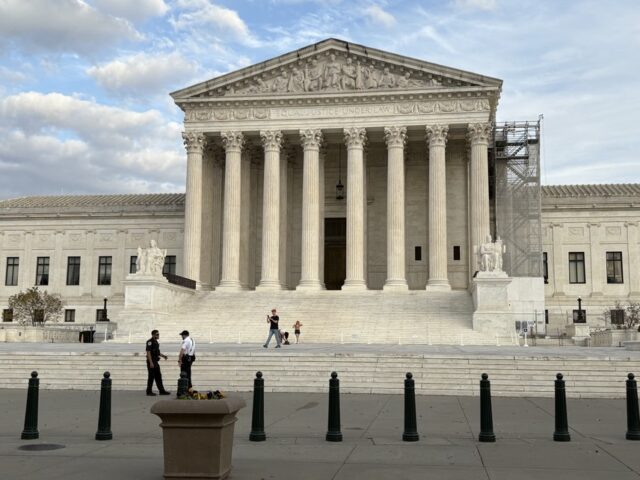 The most frequently charged FCA allegation involves billing fraud — from straightforward invoicing discrepancies to complex cost accounting disputes. Our attorneys understand that many billing irregularities arise from regulatory misinterpretation, cost accounting standard ambiguities, or accounting system limitations — not intentional fraud. As a defense contractor fraud law firm, we work with forensic accountants and cost accounting specialists to challenge the government’s characterization of billing conduct and its damage calculations.
Buy American Act and Trade Agreements Act Defense
BAA and TAA enforcement has intensified significantly, particularly for defense, technology, and telecommunications contractors. Criminal and civil referrals can arise from supply chain decisions that appeared compliant at the time of contract performance. Our government fraud attorneys defend manufacturers, subcontractors, and prime contractors facing TAA enforcement actions, CIDs, and criminal subpoenas related to country-of-origin misrepresentation.
Small Business Certification and SBA Program Fraud Defense
SBA set-aside fraud — involving 8(a), HUBZone, SDVOSB, WOSB, or other programs — is aggressively prosecuted by DOJ and the SBA Office of Inspector General. These cases turn on technical questions about affiliation rules, size standards, and limitation on subcontracting requirements that only attorneys with deep procurement expertise can address effectively.
Qui Tam / Whistleblower Defense
Qui tam complaints are filed under seal and investigated by the government before contractors are notified. You may be under active investigation for years before any indication of a lawsuit exists. Once the seal is lifted, the government will have already built a substantial evidentiary record. Our attorneys respond aggressively: challenging the relator’s standing, attacking the factual basis of the complaint, and presenting the government with compelling grounds to decline intervention or seek a favorable early resolution.
GSA / MAS Contract Fraud Defense
GSA fraud enforcement has intensified around price disclosure obligations, most-favored-customer pricing, and TAA compliance on Multiple Award Schedule contracts. Our defense attorneys understand the Commercial Practices clause, CSP disclosure requirements, and price reduction clause obligations that form the basis of most GSA FCA allegations.