
Florida False Claims Act Lawyers & Federal Qui Tam Defense Attorneys
Florida False Claims Act Lawyers and Qui Tam Defense Attorneys for Companies and Executives
 A civil investigative demand arrived with a return date three weeks out. Or HHS-OIG asked for two years of patient files. Or a former billing manager left angry, and now an Assistant U.S. Attorney in Miami or Tampa wants to “schedule a call.” You are asking the same questions every Florida executive asks at this point: How big is this? Is it civil or criminal? Am I personally exposed? Will we lose our contracts or our Medicare billing privileges?
Those questions have answers, and the weeks before the government decides whether to intervene or charge are usually when a company has the most influence over them. Our Florida False Claims Act lawyers and qui tam defense attorneys defend government contractors, healthcare organizations and their executives in all three Florida federal districts, starting at the civil investigative demand and continuing, if a case goes that far, through indictment and trial. The team includes a former federal prosecutor from the Major Frauds Section, a former federal contracting officer and a former DoD procurement official.
- Former Assistant U.S. Attorney, Major Frauds Section
- Former federal contracting officer and former DoD procurement official
- One team for the civil case, the criminal case and suspension, debarment or exclusion
Speak with a Florida False Claims Act defense attorney: 1 (866) 601-5518
Free, confidential consultation · Lines Answered 24/7 · Schedule to speak with a lawyer.
Request a Confidential Case Review · Download the False Claims Act Response Checklist
If a CID or subpoena arrived today: issue a written litigation hold, do not let anyone give an informal interview, and take no action against an employee you suspect is the whistleblower.
Where is your case right now?
- “We received a civil investigative demand, a grand jury subpoena or an HHS-OIG subpoena.” → The first 72 hours
- “A qui tam complaint was unsealed, or we think one was filed.” → How Florida False Claims Act cases move from CID to trial
- “Agents interviewed our people, or someone received a target letter.” → When a Florida False Claims Act case becomes criminal
- “We hold federal contracts or subcontracts.” → Government contract and procurement fraud defense
- “We bill Medicare, Medicaid or TRICARE.” → Florida healthcare fraud defense
- “I am the CEO, CFO or an owner.” → What Florida executives need to know
What CEOs Must Know About Federal Qui Tam Investigations
Why Florida False Claims Act defense is different
Florida is one of the most active federal False Claims Act jurisdictions in the country. Enforcement runs through three U.S. Attorney’s Offices, DOJ’s Civil Fraud Section in Washington, and a DOJ Health Care Fraud Strike Force based in Miami. A Florida qui tam defense attorney has to know which of those offices is looking at you, what each one tends to pursue, and when a civil matter is likely to pick up a criminal track.
Florida’s three federal districts
| District | Divisions | What companies in this district often face |
| Southern District of Florida | Miami, Fort Lauderdale, West Palm Beach, Fort Pierce, Key West | Health Care Fraud Strike Force cases, DME, pharmacy, lab and home health billing, Medicare Advantage, parallel civil and criminal matters |
| Middle District of Florida | Tampa, Orlando, Jacksonville, Fort Myers, Ocala | Large civil FCA settlements (including Medicare Advantage risk adjustment), defense and simulation contractors around Tampa and Orlando, kickback cases |
| Northern District of Florida | Tallahassee, Pensacola, Panama City, Gainesville | Contractors serving Eglin AFB, Hurlburt Field and NAS Pensacola, federal grant matters |
The June 2026 National Health Care Fraud Takedown shows how this plays out: DOJ listed 36 Florida defendants, with federal cases filed in the Southern, Middle and Northern Districts (WUSF). Our Florida False Claims Act lawyers handle matters in all three districts. Our regional pages cover Tampa False Claims Act defense, Orlando False Claims Act defense and Miami white collar defense.
Federal cases only
Watson & Associates handles federal matters exclusively: federal False Claims Act investigations and qui tam lawsuits, federal criminal fraud cases, and the related suspension, debarment and exclusion proceedings. When people search for Florida False Claims Act lawyers, most are dealing with a federal case brought in a Florida federal court, and that is the work we do. Florida also has a state false claims statute enforced by the state Attorney General; a matter brought only under state law needs Florida-licensed state counsel.
What the government must prove in a Florida False Claims Act case, and what it can cost
The federal False Claims Act, 31 U.S.C. §§ 3729–3733, makes it a civil violation to knowingly submit, or cause someone else to submit, a false claim for federal money, or to knowingly make a false record or statement material to one. It also covers “reverse false claims,” which means knowingly keeping money owed back to the government.
Three questions decide most cases
- Was the claim actually false? When a contract clause, coverage rule or coding guideline can reasonably be read more than one way, falsity is often the first battleground.
- Did the company act “knowingly”? The government must prove actual knowledge, deliberate ignorance or reckless disregard. Negligence and honest mistakes are not enough. Since United States ex rel. Schutte v. SuperValu (2023), the question is what the company actually believed at the time.
- Did it matter to payment? Under Universal Health Services v. Escobar (2016), the misstatement must have been material to the government’s decision to pay. If the agency knew about the issue and kept paying, that is strong evidence it was not.
What is at stake
| Exposure | Amount or rule |
| Damages | Three times the government’s loss (can drop to two times for qualifying self-disclosure) |
| Federal civil penalty | $14,308 to $28,619 per false claim (2025 levels, still in effect) |
| Standard of proof | Preponderance of the evidence in the civil case |
| Criminal exposure | Separate charges under Title 18, proved beyond a reasonable doubt |
| Collateral risk | Suspension, debarment, exclusion from federal health programs, payment suspension, Corporate Integrity Agreement |
Penalties apply per claim, usually per invoice or billed service, which is why exposure can exceed the actual loss many times over. Penalty source: Sidley FCA Blog; see also our guide to False Claims Act penalties.
How Florida False Claims Act cases move from civil investigative demand to indictment and trial
Most competitors describe either the civil case or the criminal case. In Florida, the two often move together, and the decisions made at stage one shape what is possible at stage five. As your Florida False Claims Act lawyers, we work every stage with the same team.
- The first demand. A civil investigative demand under 31 U.S.C. § 3733, an HHS-OIG or Inspector General subpoena, or a grand jury subpoena. A CID usually means a sealed qui tam complaint exists and DOJ is actively investigating. Return dates, scope and custodians can be negotiated, but only before the date passes.
- The government investigation. Investigators pull claims data, interview current and former employees, and may take sworn CID testimony. This is usually the highest-leverage stage for the defense: a well-supported presentation on falsity, knowledge, materiality or damages can narrow the case or support a declination.
- The intervention decision and unsealing. DOJ intervenes, declines or intervenes in part. Once the complaint is unsealed and served, a defendant has 20 days to respond (31 U.S.C. § 3730(b)(3)). Declined cases can still proceed with the relator. From here, qui tam defense shifts from persuasion to litigation.
- The criminal track opens. Agents conduct interviews, a grand jury issues subpoenas, and someone may receive a target letter. Before indictment, counsel can make a presentation to the prosecutor; after indictment, the government has committed publicly.
- Indictment, motions and trial. Motions to dismiss, discovery challenges to sampling and loss figures, and, where needed, trial before a jury in Miami, Fort Lauderdale, Tampa, Orlando, Jacksonville or Tallahassee. The civil False Claims Act case is often stayed while the criminal case proceeds.
- Resolution and collateral proceedings. Civil settlement or judgment, plea or verdict, sentencing, and the suspension, debarment, exclusion and Corporate Integrity Agreement decisions that often matter more to the business than the dollar figure.
The first 72 hours after a CID or subpoena
Most avoidable damage in a Florida False Claims Act matter happens in the first week, before a lawyer is involved. These steps protect your options. The right order for your company depends on what the government already has.
Do this now
- Issue a written litigation hold the same day. Suspend auto-delete, retention purges and laptop wipes for departing employees.
- Calendar the return date and have counsel contact the Assistant U.S. Attorney or DOJ trial attorney before it arrives to discuss scope and timing.
- Route all government contact to one person. Employees may decline informal interviews and may have a lawyer present.
- Move internal discussion under privilege. Stop email threads about the matter among non-lawyers.
- Choose your own counsel before an insurer or prime contractor assigns one. Interests diverge quickly.
Avoid these mistakes
- Letting executives have “off-the-record” conversations with agents or auditors. A false statement to an agent is its own felony under 18 U.S.C. § 1001.
- “Correcting” records, re-billing or amending certifications after notice.
- Treating the matter as purely civil. DOJ’s civil and criminal attorneys coordinate.
- Confronting, reassigning or disciplining anyone you think is the relator.
Call 1 (866) 601-5518. A Florida qui tam defense attorney will review the CID, subpoena or complaint with you and explain what it suggests about the government’s theory. You can also use our civil investigative demand response checklist.
Government contract and procurement fraud defense in Florida
Florida is home to MacDill Air Force Base (U.S. Central Command and U.S. Special Operations Command), Eglin Air Force Base, the Navy’s Jacksonville and Pensacola installations, Orlando’s military simulation and training community and the Space Coast. That concentration of federal contracting dollars produces a steady flow of procurement False Claims Act cases, many filed by former employees who understand the contract better than anyone else. That makes early qui tam defense planning essential.
Contractor cases turn on the contract itself: what a clause required, what a certification meant, how a cost was allocated, whether a company was eligible for a set-aside. That is why our government contractor defense attorneys include a former contracting officer and a former DoD procurement official alongside former prosecutors. As Florida False Claims Act attorneys and government contract fraud lawyers, we defend primes, subcontractors and executives in matters involving:
- Defective pricing and cost mischarging: TINA disclosures, labor mischarging, shifting costs between fixed-price and cost-type contracts, and unallowable indirect costs
- Small business eligibility: 8(a), SDVOSB, WOSB and HUBZone status, affiliation and pass-through allegations (SBA program fraud defense)
- Cybersecurity certifications: DFARS 252.204-7012, NIST SP 800-171 scores and CMMC representations
- Country of origin and customs: Buy American Act and Trade Agreements Act certifications and tariff evasion
- Product substitution, testing and quality-assurance certifications, GSA Schedule pricing, and kickbacks
Contractor matters also carry mandatory-disclosure obligations under FAR 52.203-13 and suspension and debarment risk, which must be managed alongside the False Claims Act case. Criminal exposure can include major fraud against the United States (18 U.S.C. § 1031), false claims (§ 287) and conspiracy (§ 371). For more, see our procurement fraud attorneys page.
Florida healthcare fraud defense: civil False Claims Act and criminal cases
Healthcare accounts for most False Claims Act money nationally, more than $5.7 billion of the $6.8 billion DOJ recovered in fiscal year 2025 and Florida is at the center of it. In August 2026, a Central Florida provider group agreed to a $541.5 million settlement over Medicare Advantage diagnosis coding, one of the largest False Claims Act resolutions of the year (DOJ).
Healthcare cases rarely turn on one bad claim. They turn on a billing pattern, a referral relationship or a data analysis that flagged a provider as an outlier. Defending them means testing the government’s sampling and extrapolation, the coverage and coding rules it relies on, and whether its theory survives Escobar and SuperValu. Our Florida False Claims Act defense team represents hospitals, physician practices, laboratories, pharmacies, home health and hospice agencies, DME suppliers, Medicare Advantage organizations and their executives in matters involving:
- Anti-Kickback Statute and Stark Law: marketing arrangements, medical directorships, lab and DME referral relationships
- Medicare Advantage risk adjustment and diagnosis coding
- Medical necessity, upcoding and unbundling, including statistical sampling challenges
- The 60-day overpayment rule, where keeping an identified overpayment can become a reverse false claim
- Telehealth, genetic testing, wound care and DME billing, the categories most often charged in Florida takedowns
- Medicaid billing, where federal Medicaid dollars bring a claim within the federal False Claims Act
Healthcare cases carry their own collateral risks, including exclusion under 42 U.S.C. § 1320a-7, payment suspension and Corporate Integrity Agreements. For criminal health care fraud under 18 U.S.C. § 1347, see our Florida healthcare fraud lawyer page and our Miami Medicare fraud defense page.
When a Florida False Claims Act case becomes criminal
There is no wall between DOJ’s civil and criminal sides, and in South Florida the Strike Force model is built to run them together. The same facts can support charges for health care fraud (18 U.S.C. § 1347), conspiracy (§§ 1349 and 371), false claims (§ 287), false statements (§ 1001), major fraud (§ 1031), wire fraud (§ 1343) and kickbacks (42 U.S.C. § 1320a-7b(b)). Documents produced in response to a CID can reach prosecutors, and sworn CID testimony can become trial evidence. A criminal conviction also prevents you from contesting the same facts in the civil case (31 U.S.C. § 3731(e)).
That is why the civil response has to be built with the criminal question in mind from day one: who sits for testimony, whether anyone should assert the Fifth Amendment, how company cooperation affects individual employees, and when to approach the prosecutor. If a case is charged, our Florida federal criminal defense attorneys handle arraignment, detention, discovery, motions, plea negotiations, trial and sentencing. The same Florida False Claims Act lawyers who handled the CID stay with the case.
What Florida CEOs, owners and boards need to know
If you lead the company, you have two jobs at once: protect the organization and protect yourself. Those are not always the same job. DOJ policy expects companies seeking cooperation credit to identify the individuals involved (Justice Manual § 4-4.112), and executives, owners and compliance officers are regularly named personally.
- The company’s lawyer is not your lawyer. Company counsel represents the entity. If your conduct is part of the inquiry, you may need separate counsel.
- Retaliation is its own case. Adverse action against a suspected whistleblower creates liability under 31 U.S.C. § 3730(h), regardless of how the underlying case ends.
- Exclusion and debarment can arrive before any finding. For many companies, losing the right to bill Medicare or win federal contracts is a bigger threat than the damages number.
- Your board, lenders and insurers will need to know. D&O policies often have notice deadlines and consent-to-counsel clauses, and the timing of those communications is part of the defense.
Call 1 (866) 601-5518 to talk through your personal position confidentially with a Florida False Claims Act attorney.
Defenses we build in Florida False Claims Act and qui tam defense cases
The most effective defenses usually work together, and most depend on preserving the record early.
- No knowing falsity. Legal opinions, questions to the contracting officer or Medicare contractor, industry practice and genuinely ambiguous rules show good faith.
- No materiality. Evidence that the agency knew about the issue and kept paying can defeat liability under Escobar.
- Damages and penalty limits. How “a claim” is counted, whether the government received value, and whether the penalties are grossly disproportionate can change exposure dramatically.
- Pleading and relator defenses. Rule 9(b) requires specific false claims. The public-disclosure bar and first-to-file rule end many qui tam cases. In October 2026, a Middle District of Florida court dismissed a qui tam case against a device company on first-to-file grounds
- Statute of limitations under 31 U.S.C. § 3731(b).
- Constitutional challenges. On September 1, 2026, the Eleventh Circuit, which covers Florida, reversed the Zafirov ruling that qui tam provisions violate the Appointments Clause, but it sent the remaining Article II arguments back to the district court (Mayer Brown). Florida defendants should consider preserving those arguments.
Settlement, self-disclosure and cooperation credit
Most Florida False Claims Act matters resolve without trial, but the terms depend on how well the government’s theory has been tested. The dollar figure is only one term. Others include what the release covers, whether the agreement admits liability, whether it triggers exclusion or debarment, whether a Corporate Integrity Agreement is required and whether individuals are protected.
- Statutory double damages. Full disclosure within 30 days, before any action begins, can reduce damages from treble to double under 31 U.S.C. § 3729(a)(2).
- DOJ cooperation credit. The Villages Health System settlement in the Middle District of Florida was based on self-disclosed allegations and received credit for disclosure, cooperation and remediation
- The 2026 healthcare self-disclosure pilot. On October 22, 2026, DOJ and HHS opened a six-month program offering repayment at 1.25 to 1.6 times damages, with no admissions and no Corporate Integrity Agreement for qualifying disclosures made by April 22, 2027 (Legal 500).
Disclosure carries real risk on both sides. A qui tam defense lawyer should investigate under privilege before you decide.
2026 developments that affect Florida companies
| Date | Development | Why it matters in Florida |
| Oct 22, 2026 | DOJ–HHS healthcare self-disclosure pilot opens (through Apr 22, 2027) | A defined path to resolve a problem you found yourself |
| Oct 2026 | M.D. Fla. dismisses a qui tam case on first-to-file grounds | Procedural defenses still end cases in Florida |
| Sep 1, 2026 | Eleventh Circuit reverses Zafirov (M.D. Fla.) | Qui tam cases continue in Florida; other Article II arguments remain open |
| Aug 26, 2026 | $541.5M Medicare Advantage settlement, M.D. Fla. | Risk adjustment is a top enforcement area; cooperation credit applied |
| Jun 2026 | National Health Care Fraud Takedown, 36 Florida defendants | Criminal healthcare enforcement remains concentrated in Florida |
| FY2025 | Record $6.8B recovered nationally; 1,297 qui tam suits filed | More whistleblower cases, filed earlier |
Why Florida companies choose Watson & Associates
Search for a Florida False Claims Act lawyer and most of the results are whistleblower firms. They represent relators and are paid from the recovery against companies like yours. A smaller group of firms defends companies, and most of them pair former prosecutors with former agents.
Our Florida federal False Claims Act and qui tam defense team is built differently. It pairs a former federal prosecutor from the Major Frauds Section with a former contracting officer, a former DoD procurement official and a former Small Business Administration attorney: people who wrote, awarded and administered the contracts, certifications and program rules these cases are built on. When the government says a requirement was clear, we can show from experience how it was actually read and enforced inside the agency. That is often the difference between a falsity or materiality argument that persuades a prosecutor and one that does not. And because the same team handles the civil case, the criminal case and debarment or exclusion, nothing said in one forum is said without considering the others. Review our representative cases and client testimonials.
Meet our Florida False Claims Act defense team
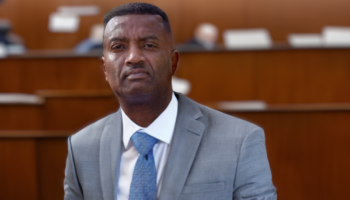
Speak to National Practice Leader, U.S. Air Force Retired Veteran, Theodore Watson (Over 23 Years of Federal and Procurement Practice)
- He oversees Federal False Claims Act defense lawyers nationwide, healthcare fraud False Claims Act defense attorneys and qui tam defense lawyers and a team of defense contractor fraud attorneys.
Carolyn L. Oliver – Counsel (Former DOJ Attorney)
 Of Counsel to Watson & Associates, LLC: Carolyn L. Oliver brings over 40 years of distinguished legal experience to Watson & Associates’ Federal White Collar Defense and Investigations practice. As a former DOJ Prosecutor and Assistant United States Attorney in the Major Frauds Section of the U.S. Attorney’s Office for the Southern District of California, Oliver provides clients with representation from a federal white collar criminal defense attorney who has prosecuted the very types of cases she now defends. Her extensive federal prosecution background, combined with her proven track record in complex criminal defense, positions her as a formidable advocate for corporations, CEOs, and individuals facing high-stakes federal False Claims Act investigations. Read more.
Our Florida 31 USC 3729–3733 and 18 USC 287 False Claims Act lawyers are standing by to help you with your federal criminal False Claims Act defense in Florida.
We represent corporations, CEO’s and high-level individuals across the Florida in cases involving government contract fraud, SEC fraud, healthcare fraud, Trade Agreements Act (TAA Compliance), Buy American Act (BAA Compliance), SBA PPP fraud and other federal white collar crimes for “false and fraudulent” claims.
Questions Florida executives ask about False Claims Act and qui tam defense
What does a Florida False Claims Act lawyer do for a company under investigation?
A defense lawyer manages the government relationship from the first demand: negotiating the scope and timing of the CID, controlling document production and witness preparation, investigating the facts under privilege, and presenting the company’s position before DOJ decides whether to intervene. If the matter turns criminal, the lawyer protects the company and its people through any grand jury, indictment and trial.
How do I choose a Florida False Claims Act defense lawyer?
Ask four questions. Does the firm represent whistleblowers, which can create a conflict? Have its lawyers worked for DOJ, a U.S. Attorney’s Office or the agencies investigating you? Can the same team handle the civil case, any criminal case and debarment or exclusion? And does it understand the rules your claims were billed under, whether the FAR or Medicare and Medicaid coverage and coding rules? A Florida False Claims Act defense lawyer should also be able to tell you what should happen in the first seven days. Our qui tam defense practice is built around those answers.
Do you handle cases under Florida’s state False Claims Act?
No. We handle federal cases only. Our Florida False Claims Act lawyers defend companies and executives in federal False Claims Act investigations and qui tam lawsuits in Florida’s federal courts, and in any related federal criminal case. A matter brought only under Florida’s state statute requires Florida-licensed state counsel.
What is a civil investigative demand, and does it mean we will be sued?
A civil investigative demand is a pre-suit demand from DOJ for documents, written answers or sworn testimony under 31 U.S.C. § 3733. It does not mean you will be sued. DOJ declines many qui tam cases. But it usually means a sealed complaint exists and DOJ is actively investigating, and how you respond influences the intervention decision.
Can a civil False Claims Act investigation in Florida lead to criminal charges?
Yes. The same facts can support charges under 18 U.S.C. §§ 287, 1001, 1031, 1347 and 1349, and civil and criminal prosecutors coordinate, especially in the Southern District of Florida. Civil and criminal strategy should be planned together from the start, which is why a Florida federal criminal defense attorney should be involved before anyone is interviewed.
Which federal court will hear our case?
It depends on where the claims were submitted or where the conduct occurred. Florida has three districts: the Southern District (Miami, Fort Lauderdale, West Palm Beach, Fort Pierce, Key West), the Middle District (Tampa, Orlando, Jacksonville, Fort Myers, Ocala) and the Northern District (Tallahassee, Pensacola, Panama City, Gainesville). Qui tam cases can also be filed in another state where a defendant does business.
Can I be held personally liable, or is it only the company?
Individuals can be named and held liable in both the civil and criminal cases. Executives, owners, CFOs and compliance officers are regularly included, and their interests can diverge from the company’s, which may require separate counsel.
What if the billing or invoicing errors were real, but nobody intended to defraud anyone?
The False Claims Act does not reach negligence or innocent mistakes. The government must prove knowledge, deliberate ignorance or reckless disregard. Proving good faith depends on preserving the record of what decision-makers believed at the time.
We think we know who the whistleblower is. Can we address it internally?
No. Any adverse action against a suspected relator can create a retaliation claim under 31 U.S.C. § 3730(h). Refer the issue to counsel and take no other action.
How long does a qui tam investigation take?
Often one to three years. A qui tam complaint is filed under seal, and courts routinely extend the seal while DOJ investigates. The investigation stage is usually when the defense has the most influence.
What is the statute of limitations?
Under the federal False Claims Act (31 U.S.C. § 3731(b)): six years from the violation, or three years from when the responsible government official knew or should have known the facts, with an outer limit of ten years. Old claims and closed-out contracts are not automatically safe.
We are a subcontractor and the prime is handling it. Are we covered?
Assume not. The prime’s counsel represents the prime, and primes and subcontractors often become adverse in flow-down and certification disputes.
Do you represent whistleblowers?
No. Our practice is qui tam defense: we defend companies and individuals accused of fraud. If you are an employee considering filing a qui tam case, you need relator’s counsel.
Is a consultation confidential, and what does it cost?
The first consultation is free. Information shared with a lawyer while seeking representation is generally protected, even if you do not hire the firm. Tell us what you received and when, and a Florida qui tam defense lawyer will tell you what we need next.
Talk with a Florida False Claims Act lawyer today
If a civil investigative demand, subpoena, target letter, unsealed qui tam complaint or internal discovery brought you here, the next step is a confidential conversation about what the government likely has and what your options are. Bring what you received. A member of our Florida False Claims Act and qui tam defense team will tell you what we see and what should happen this week.
Call 1 (866) 601-5518: free, confidential, answered 24/7.
Download the False Claims Act Response Checklist
Florida meeting location (by appointment only): Wells Fargo Plaza, 333 S.E. 2nd Avenue, Suite 2000, Miami, FL 33131. Offices in Washington, DC and Denver, Colorado. For our national practice, see False Claims Act defense lawyer.
Call Watson’s 31 USC 3729 – 3733 Federal Florida False Claims Act lawyers and federal criminal healthcare fraud defense lawyers at 1.866.601.5518 for a Free Initial Consultation. Speak to Theodore Watson, Lead defense lawyer.
Attorney advertising. Prior results do not guarantee a similar outcome. Watson & Associates’ practice is limited to federal law and federal procedure; attorneys are licensed only in the jurisdictions stated in their biographies. The Miami location is a meeting space and is not staffed for mail or service of process. Reading this page does not create an attorney-client relationship.