
Alabama Federal False Claims Act Defense Lawyers
Facing Federal Investigation in Alabama or Federal Indictment? Hire Our Former DOJ Attorneys and Federal Procurement Official False Claims Act Lawyers Now to Negotiate Better Terms, Avoiding Jail Time, or a Dismissal
 The Day the Government Decided You Were a Criminal – What Now? How Do You Fight Back?
It probably didn’t feel like a big deal at the time. A billing code that seemed close enough. A government contract requirement that was impossible to meet, so you did the next best thing. You’re a business owner in Alabama, a physician, a government contractor. You’re focused on running your business, not on memorizing every line of the Federal Acquisition Regulation or the Medicare manual. You’re a good person. You’re not a criminal. This is where having top Alabama False Claims Act defense lawyers can help.
Then, the letter arrives from the Department of Justice. It’s a Civil Investigative Demand. Or maybe it’s a grand jury subpoena. Suddenly, your world is turned upside down. The government has decided that you are a criminal. They have decided that you have committed healthcare or procurement fraud. And they are coming for you with everything they have.
This is the story of the federal False Claims Act. It’s a story of good people who find themselves in the cross hairs of a federal investigation. It’s a story of fear, confusion, and the terrifying realization that everything you have worked for is at risk. As former federal prosecutors, we know this story well. We used to write it. Now, we’re the ones who can help you rewrite the ending.
1.866.601.5518 Call for Immediate Help. Lines are Open 24/7.
What is the Federal False Claims Act (FCA)?
The False Claims Act (31 U.S.C. §§ 3729-3733) is the federal government’s primary weapon for combating fraud against government programs. It imposes severe civil and criminal penalties on any person or company who knowingly submits a false claim for payment to the government. In Alabama, this often involves healthcare providers billing Medicare/Medicaid, government contractors invoicing for goods and services, or businesses receiving federal grants.
A violation can lead to treble damages (three times the government’s loss) plus penalties exceeding $20,000 per false claim. For Alabama businesses, this can mean millions in fines, exclusion from federal programs, professional license revocation, and federal prison time. The stakes are incredibly high, which is why you need an experienced FCA law firm with former DOJ prosecutors on your side.
Related federal statutes often charged alongside FCA violations include 18 U.S.C. § 287 (false, fictitious, or fraudulent claims), the Anti-Kickback Statute, and Stark Law violations. Our Alabama federal criminal defense attorneys defend against all of these charges.
What You Get: An Unfair Advantage in a Fight for Your Life
When you are facing a federal False Claims Act investigation, you are not just facing a lawsuit. You are facing the full power of the United States government. They have unlimited resources, teams of investigators, and a single-minded focus on winning. You are outmatched, outgunned, and out of your depth.
What you need is an unfair advantage. You need a team of Alabama False Claims Act defense lawyers who have been on the inside. You need former federal prosecutors who know the government’s playbook, because they used to use it. You need a federal whistleblower defense lawyer who understands how to dismantle a qui tam case from the inside out. You need an Alabama False Claims Act investigation attorney who can get ahead of the federal government’s investigation and build a defense that can win.
This is what you get when you hire Watson & Associates. You get an unfair advantage. You get a team of former federal insiders who will fight for you, protect you, and guide you through the most difficult challenge of your life. We are the federal False Claims Act criminal defense attorneys you need to fight federal cases in Alabama.
The Federal False Claims Act in Alabama: A Trap for the Unwary
The False Claims Act is a complex and dangerous law. It imposes liability on any person who knowingly submits a false claim to the government. But “knowingly” doesn’t mean what you think it means. It can mean that you acted with “reckless disregard” for the truth. In other words, you can be found liable for a False Claims Act violation even if you didn’t intend to defraud the government.
This is why the Federal False Claims Act is such a trap for the unwary. A simple billing mistake, a misunderstanding of a complex regulation, or a good-faith effort to comply with an impossible government contract requirement can all lead to a False Claims Act investigation. And once you are in the government’s crosshairs, you are facing a battle for your life.
Our team of Alabama False Claims Act lawyers understands the nuances of this complex law. We know how to challenge the government’s allegations of falsity, knowledge, and materiality. We know how to build a defense that can win. We are the Alabama whistleblower defense lawyer team that can protect you.
Healthcare Fraud False Claims Act: A Primary Target for Federal Prosecutors
In Alabama, healthcare providers are a primary target for False Claims Act investigations. The government is aggressively pursuing cases involving:
- Medicare and Medicaid Fraud: Billing for services not rendered, upcoding, or providing medically unnecessary services.
- Anti-Kickback Statute Violations: Offering, paying, soliciting, or receiving remuneration to induce or reward referrals for services paid for by federal healthcare programs.
- Stark Law Violations: Physician self-referrals for designated health services paid for by Medicare.
If you are a healthcare provider in Alabama and you are facing a False Claims Act investigation, you need an Alabama healthcare fraud False Claims Act defense team that understands the unique challenges you face. You need a team that can navigate the complex web of healthcare regulations and build a defense that can protect your license, your practice, and your freedom. You need a healthcare fraud False Claims Act investigation attorney in Alabama who knows how to fight back.
Alabama Government Contract Fraud Attorney & False Claims Act Lawyers
Federal Government contractors in Alabama are also a primary target for False Claims Act investigations. The government is aggressively pursuing cases involving:
- False Claims Act Violations: Knowingly submitting, or causing to be submitted, false or fraudulent claims for payment to the government.
- Cost Mischarging: Improperly allocating costs to government contracts.
- Procurement Fraud: Bid-rigging, kickbacks, and other forms of corruption in the procurement process.
- Small Business Administration (SBA) Fraud: Misrepresenting eligibility for small business set-aside contracts (e.g., 8(a), SDVOSB, WOSB).
If you are a government contractor in Alabama and you are facing a False Claims Act investigation, you need a government contract fraud False Claims Act defense team that understands the high-stakes game you are playing. You need a team that can navigate the complex world of government contracting and build a defense that can protect your business, your reputation, and your future. You need a white-collar criminal defense lawyer who can win.
Federal Whistleblower Lawsuits
A federal False Claims Act case often begins with a whistleblower lawsuit, also known as a qui tam lawsuit. A whistleblower can be a current or former employee, a competitor, or anyone with knowledge of the alleged fraud. The whistleblower files a lawsuit on behalf of the government and can receive a share of any recovery.
This creates a powerful incentive for whistleblowers to come forward, and it makes it even more dangerous for defendants. A whistleblower lawsuit can be a weapon of mass destruction, capable of destroying your business and your life. But it can also be defeated. Our Alabama whistleblower defense lawyer team knows how to challenge the whistleblower’s allegations, attack their credibility, and build a defense that can win.
What to Do When You Are Under Investigation
If you have received a target letter, a grand jury subpoena, a Civil Investigative Demand (CID), or have been contacted by federal agents, your next moves are critical:
- Say Nothing. Exercise your Fifth Amendment right to remain silent. Politely tell the agents that your attorney will contact them. Do not try to “explain” or “cooperate” without legal counsel.
- Preserve Everything. Do not delete emails, shred documents, or alter any records. Obstruction of justice charges can be added to your case and can carry severe penalties.
- Call Us Immediately. Do not wait. The government has already been investigating you for months or even years. The sooner you have experienced Alabama False Claims Act defense lawyers on your side, the more options we have to protect you.
Watson & Associates, LLC brings a team of former federal prosecutors and government insiders to your Alabama False Claims Act defense. We know their tactics because we used to be them. Our lines are open 24/7. If you are under investigation, call our experienced False Claims Act law firm immediately at 1-866-601-5518 for an emergency consultation.
Watson’s Alabama Practice Team Leads – FCA Counsel
James Allen (Defense Counsel – Alabama Primary)
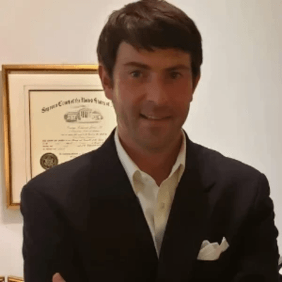 James M. Allen, Of Counsel (Alabama Primary Defense Attorney) to Watson & Associates, LLC, is a committed federal white collar criminal defense attorney with experience handling a range of complex matters at the trial and post-conviction levels.
His background includes defending clients in both state and federal forums, with a growing emphasis on federal white collar criminal defense.
As a federal white collar crime attorney in Alabama, he maintains a strong professional interest in matters involving procurement fraud, SBA investigations, and regulatory enforcement, and is well-versed in the legal frameworks and defense strategies that shape those cases. James brings a measured, thoughtful approach to every case, prioritizing clarity, strategic planning, and strong client communication.
Chris Mancini (Former DOJ Prosecutor)
 Chris Mancini, Counsel, brings 45 years of legal experience to Watson & Associates to support the firm’s federal white collar defense attorney services, including eight years as an Assistant U.S. Attorney in the Southern District of Florida (DOJ), where he served as Deputy Chief of both the Criminal Division and Civil Division.
Chris Mancini specializes in navigating the complexities of the federal court system, providing legal advice, investigating cases, and building strong defense strategies to protect the firm’s clients’ rights and achieve the best possible outcome.
If you have been indicted for a federal white collar crime, you should hire experienced white collar crime lawyers to protect your rights and fight back. Federal fraud defense attorney, Chris Mancini can help. Read more.
Carolyn L. Oliver – Counsel (Former DOJ Attorney)
 Of Counsel to Watson & Associates, LLC: Carolyn L. Oliver brings over 40 years legal experience to Watson & Associates’ Federal White Collar Defense and Investigations practice. As a former DOJ Prosecutor and Assistant United States Attorney in the Major Frauds Section of the U.S. Attorney’s Office for the Southern District of California, Oliver provides clients with representation from a federal white collar criminal defense attorney who has prosecuted the very types of cases she now defends. Her extensive federal prosecution background, combined with her proven track record in complex criminal defense, positions her as a formidable advocate for corporations, CEOs, and individuals facing high-stakes federal investigations.
Carolyn is a recognized leader in criminal defense, known for her fierce courtroom advocacy and unwavering commitment to justice. She has successfully defended countless clients, earning a reputation for results-driven strategies and compassionate client care. As Of Counsel to Watson & Associates’ Federal White Collar Criminal Defense and Investigations practice, Oliver focuses her practice on representing companies and individuals in federal criminal and civil investigations and prosecutions by government enforcement agencies, as well as complex federal litigation. She also advises companies on high-profile, complex, and sensitive internal investigations. Read more…
Robert “Bob” Ayers – Of Counsel

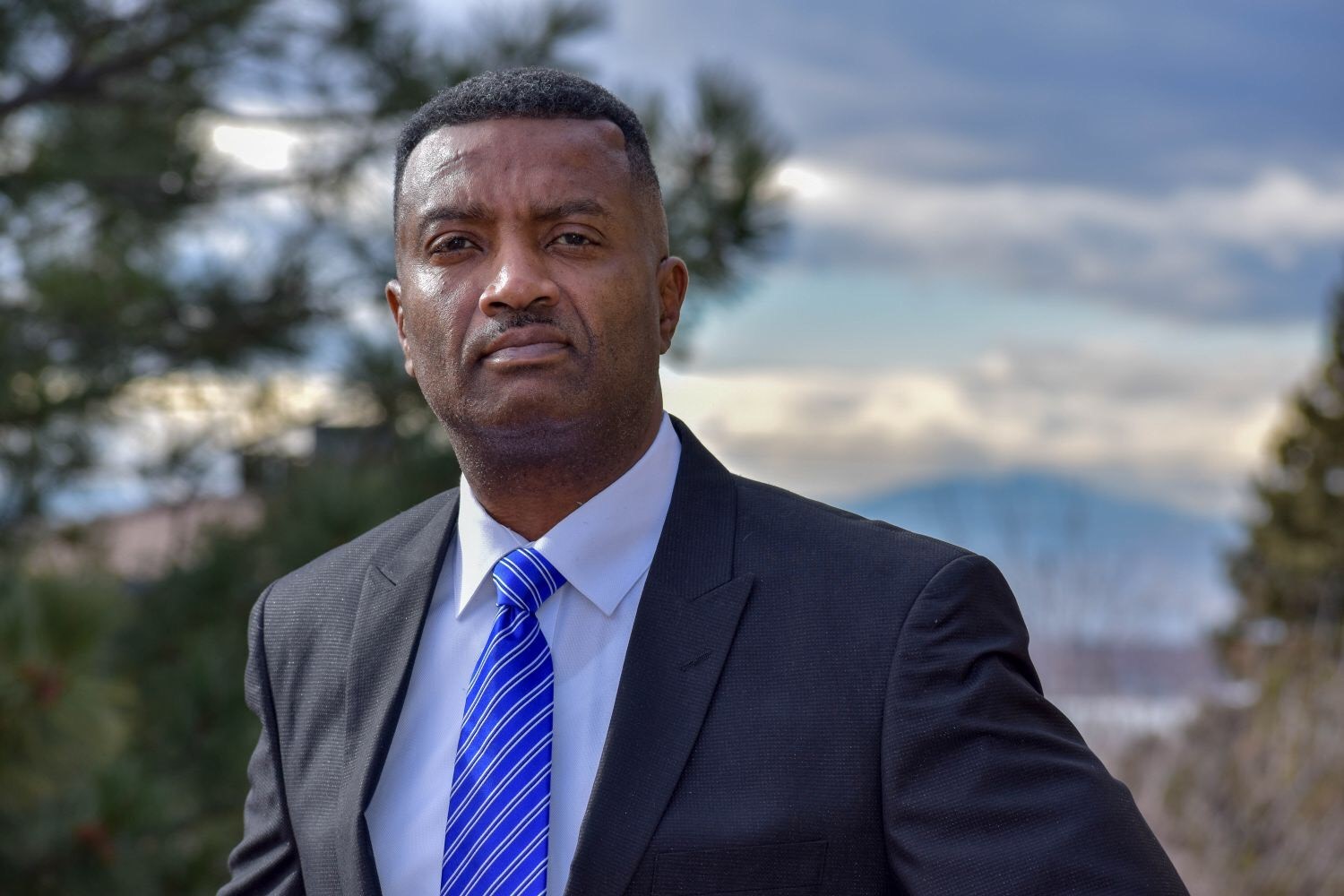 Department National Practice Group Head Theodore Watson (Admitted to the Supreme Court of the United States), leading the Alabama False Claims Act, Healthcare Fraud and Government Contracts Practice Group, brings a unique perspective. He understands the various nuances and adeptly handles legal issues in the U.S. government space.
Help in US Federal Civil and Criminal Defense While Collar Crime Cases
Our law firm offers proactive strategies to protect your rights and reputation, leveraging our in-depth understanding of the federal civil and criminal legal landscapes.
For legal support in government contract fraud defense in Alabama, and federal fraud criminal defense, contact Theodore Watson at 1.866.601.5518. We Mobilize to Represent You Within 24 Hours.
Our law firm represents government contractors, healthcare providers, CEOs and corporations facing federal white collar crime charges.
Federal False Claims Act Penalties
The penalties under the Federal False Claims Act are severe. Civil penalties can include treble damages (triple the amount of the fraudulent claim) and fines up to $11,000 per false claim. In criminal cases (18 USC 287):, the stakes are even higher, with potential imprisonment and fines reaching up to $250,000 for individuals and $500,000 for corporations per claim.
Beyond financial penalties, you risk losing your professional license, government contracts, and, most importantly, your reputation. Our Alabama False Claims Act attorneys and FCA Criminal defense work tirelessly to minimize these penalties, aiming for case dismissal or reduced fines.
Federal Alabama False Claims Act Qui Tam Defense Lawyers
Whether you are facing federal civil or criminal charges for government contracts fraud or healthcare fraud, your case may have started via a whistleblower who filed the Qui Tam case on behalf of the federal government.
At Watson & Associates, LLC our Alabama qui tam defense lawyers defend against relators when a frivolous or weak case is filed against you. We represent clients facing criminal or civil False Claims Act charges for healthcare fraud, government contractor fraud, violation of the Trade Agreements Act (TAA compliance), Buy American Act fraud, bank fraud, embezzlement, wire fraud, conspiracy charges and more.
Alabama Civil Investigative Demand (CID) Lawyers
When the OIG, DOI or some other federal law enforcement agency targets you for alleged FCA violations, they will usually start a government investigation. Whether the focus is on you or your company, having a False Claims Act investigation attorney on your team can be highly beneficial. We help you respond to civil investigative demands, federal subpoenas and provide legal advice from beginning to end.
Statewide Representation in Federal White Collar Crime Cases
Our Alabama white collar crime lawyers and False Claims Act attorneys Serve Birmingham, criminal lawyers in Montgomery Alabama, Mobile False Claims Act defense lawyers, Huntsville Federal False Claims Act Lawyers, Tuscaloosa white collar crime lawyers, Hoover, Dothan, Auburn, Decatur False Claims Act attorneys, Madison False Claims Act defense attorneys, Florence, Gadsden, Prattville white collar crime lawyers, Phenix City, Alabaster, Bessemer, Enterprise, Opelika, Homewood, Northport, Vestavia Hills, Anniston Alabama government contracts fraud lawyer, Athens healthcare fraud lawyers, Pelham, Mountain Brook, Trussville, Helena, Albertville, Selma, Oxford, Cullman, Fairhope, Ozark False Claims Act lawyers, Foley, Jasper, Center Point, Daphne, Gardendale, Saraland, Hartselle, Troy, Sylacauga, Leeds, Muscle Shoals white collar criminal defense attorney, Eufaula, Millbrook, Alexander City government contract fraud attorneys, Fort Payne, Moody, Irondale, Gulf Shores, Scottsboro, Pell City, Clanton, Sheffield, Tuscumbia, Atmore, Boaz, Talladega, Andalusia Alabama government programs fraud lawyer, Monroeville, Jackson, Oneonta, Lanett, Satsuma Alabama cares act fraud lawyer, Bay Minette, Roanoke, Red Bay, Hokes Bluff, Fultondale, Guntersville, Hamilton, Rainsville, Piedmont, Valley, Greenville, Brewton, Chickasaw, Lincoln federal criminal defense lawyer, Arab, Rainbow City, Ashville False Claims Act healthcare fraud lawyers, Demopolis, Bridgeport Alabama stark and anti-kickback lawyer, Luverne, Geneva, Tallassee, Headland, Evergreen, Fayette, Winfield, Glencoe, LaFayette, Vernon, Opp, Wetumpka, Bayou La Batre, Springville, Midfield, Slocomb, Tarrant, Thomasville, Haleyville, Moulton, Ashland, Brundidge, Elba, Collinsville, Clayton, Warrior, and Chatom., and surrounding metro areas.
Alabama False Claims Act Government Contract Fraud Lawyers
Alabama SBA PPP Loan Fraud Defense Lawyers ( Loans Must be More than $350K)
Alabama Civil Investigative Demand (CID) Lawyers and Federal Subpoena Attorneys
Emergency Contact and Immediate Action Protocol
Watson & Associates, LLC is ready to defend you 24/7. Our team of former DOJ prosecutors knows how to beat the government’s case because we used to be on their side. Call 1-866-601-5518 now for an emergency consultation with James Allen or Theodore Watson. Our lines are open 24 hours a day, 7 days a week.
CALL 1-866-601-5518 NOW – SPEAK TO JAMES ALLEN OR THEODORE WATSON