
Puerto Rico Government Contract Fraud Lawyers
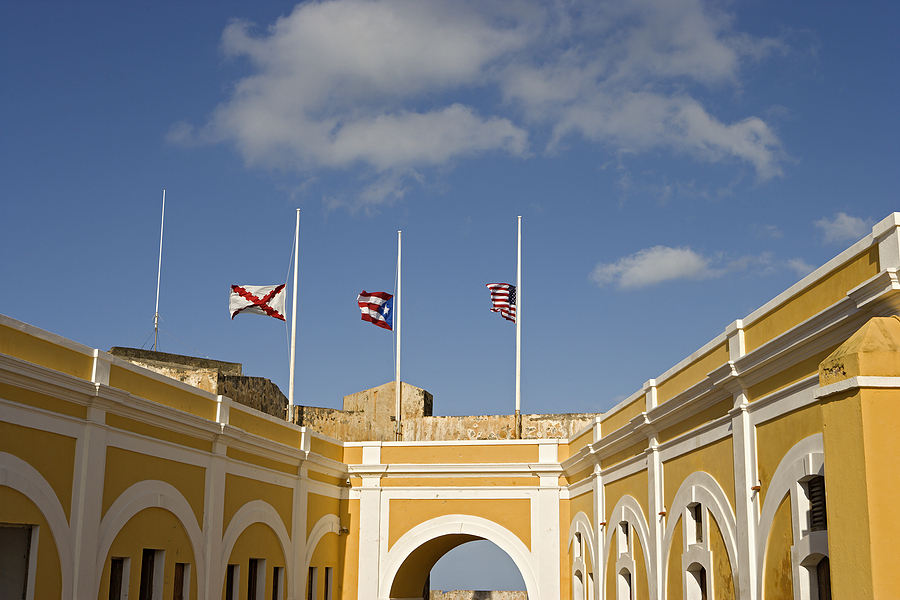
Puerto Rico Government Contract Fraud Lawyers & False Claims Act Defense Attorneys – Federal Criminal Defense for Contractors
When federal investigators from the FBI, DOJ Inspector General, or HHS Office of Inspector General target your contracting business or healthcare organization in Puerto Rico, you are entering a high-stakes federal enforcement environment where criminal charges, civil False Claims Act liability, debarment, and complete destruction of your business become real possibilities. At that point, you need Puerto Rico government contract fraud lawyers whose entire practice is built around defending federal contractors and healthcare providers from investigation through trial.
Our firm represents government contractors, healthcare providers, small businesses, and executives in Puerto Rico who face:
-
Federal government contract fraud and procurement fraud investigations and prosecutions
-
Civil False Claims Act cases and qui tam whistleblower lawsuits
-
Criminal charges, including wire fraud, conspiracy, theft, money laundering, and major fraud against the United States
-
Small business program fraud allegations (HUBZone, SDVOSB, 8(a), WOSB)
-
Buy American Act and Trade Agreements Act compliance violations
-
Healthcare fraud and billing fraud prosecutions
-
Bid rigging, kickback, and public corruption cases
We are Puerto Rico government contracts attorneys who exclusively defend contractors and providers—we do not represent whistleblowers or pursue qui tam claims. Our work begins when federal enforcement risk becomes real, and continues through investigation, indictment, trial, and appeal. Lines open 24/7. Call us at 1.866.601.5518
Expert Legal Services for Federal Government Contractors and HealthCare Industry Clients in Puerto Rico. We Serve Clients in San Juan, Bayamón, Ponce, Carolina, Caguas, Arecibo, Mayagüez, Guaynabo, Trujillo Alto, and Fajardo.
Types of Government Contract Fraud False Claims Act Cases
 If you are facing criminal charges or being investigated for government contract fraud, Watson’s Puerto Rico federal criminal defense lawyers can help with:
- Bid rigging: When companies conspire to ensure a predetermined winner receives the contract
- False statements: When companies submit proposals with false or misleading information
- Defective products or services: When companies provide goods or services that do not meet the contract specifications
- Progress payment fraud: When a contractor fraudulently certifies that they have incurred costs that are eligible for reimbursement
- Fraud involving nonconforming materials: When contractors falsify documentation that all materials meet the contract specifications
- Cost mischarging: When a company inflates its costs charged to the government
- Cross-charging: When a company performs work on one contract and charges the costs of this work to another contract
- Bribes or kickbacks: When a company obtains a contract through bribery or kickbacks
- Misrepresenting cybersecurity safety protocols: When a company misrepresents cybersecurity safety protocols in place, or conceals data breaches
- Trade Agreements Act non-compliance. When companies fail to follow TAA compliance requirements when selling products to the government.
- Buy American Act non-compliance. When companies fail to follow BBA compliance requirements when selling products and materials to the government
- Violating SBA Programs such as 8(a) BD Program, HUBZone, and SDVOSB requirements
- Falsifying information on contract proposals.
- Using Federal funds to purchase items that are not for Government use.
- Billing more than one contract for the same work.
- Billing for expenses not incurred as part of the contract.
- Billing for work that was never performed.
Our Government Contract Fraud Defense Team Leads
Executives want to know who is actually in the room when things get serious. Key members of your Pennsylvania‑facing team include:
-
Carolyn Oliver, Esq.( Former DOJ Attorney) – Government contracts and compliance lawyer focusing on contract performance, small business program rules, and internal investigations that often sit at the center of government contract fraud cases.
-
Chris Mancini, Esq. (Former DOJ Prosecutor)– Federal criminal and white collar federal contractor defense attorney with experience in high‑stakes investigations, parallel civil/criminal matters, and complex evidence cases involving federal contractors.
-
Theodore P. Watson, Esq. – Government contracts and government contract fraud defense attorney, US Supreme Court–admitted, former federal procurement professional, and national practice lead for contractor fraud and False Claims Act defense.
-
Robert “Bob” Ayers, Esq. – Of counsel with decades of white collar and regulatory experience defending corporate executives, public officials, and companies in fraud, public corruption, and complex investigations.
-
Wise D. Allen, Esq. – Former Lieutenant Commander Judge Advocate and former federal appellate attorney with significant federal criminal and white collar litigation experience, including procurement and fraud matters.
What makes our Pennsylvania government contracting fraud lawyer team different is the combination of:
-
Former procurement officials who understand FAR/DFARS, SBA rules, and agency practices.
-
Federal criminal and False Claims Act experience—seeing these cases from both sides.
-
A national footprint focused on contractors and executives, not whistleblowers.
Federal Contract Fraud Enforcement in Puerto Rico: An Intense Environment
Puerto Rico’s unique status as a U.S. territory receiving substantial federal disaster recovery funding, combined with endemic public corruption concerns, has created one of the most aggressive federal enforcement environments in the United States. The U.S. Attorney’s Office for the District of Puerto Rico, working closely with the FBI San Juan Division, HHS-OIG, SBA-OIG, and other federal agencies, has made government contract fraud and public corruption top enforcement priorities.
Recent high-profile prosecutions demonstrate the scope and intensity of federal enforcement in Puerto Rico:
Major Government Corruption and Contract Fraud Prosecutions
2019: Former Education Secretary and Health Insurance Administrator Indicted
Julia Keleher (former Secretary of Education) and Ángela Ávila-Marrero (former Health Insurance Administration leader) were arrested and charged in a 32-count indictment for directing $15.5 million in government contracts to favored businesses and associates, receiving unauthorized commissions and payments in return. The charges included wire fraud, theft, and money laundering. The case involved four co-conspirators who benefited from the rigged contract awards.
2015: Ten Officials and Businessmen Indicted for Federal Programs Bribery
Ten Puerto Rico businessmen and government officials were indicted for schemes involving federal programs bribery, honest services wire fraud, extortion, money laundering, and obstruction of justice. The conspiracy involved obtaining government contracts through corrupt relationships with high-ranking officials, providing substandard work, failing to pay subcontractors, and repeatedly violating contract terms while enriching conspirators.
2021: University Professor and Co-Defendants Sentenced for Bid Rigging
A former University of Puerto Rico professor and co-defendants were convicted and sentenced to federal prison for conspiracy to restrain trade, wire fraud, and money laundering after rigging bids on federally-funded university projects, fabricating competitive bids, and fraudulently obtaining over $200,000 in contract awards
2025: Businessmen Indicted for PPP and EIDL Fraud
Two businessmen, a CPA, and four Puerto Rico businesses were indicted for fraudulently obtaining federal COVID-19 relief funds through at least 26 Economic Injury Disaster Loan and Paycheck Protection Program applications seeking over $2.2 million, and bribing a bank employee to facilitate processing and disbursement of the fraudulent funds. Defendants used the fraudulent proceeds to purchase properties for personal benefit.
These cases establish clear enforcement patterns: honest bidding and competition, truthful contract performance and billing, proper use of federal funds, compliance with Buy American Act and Trade Agreements Act requirements, and legitimate small business certifications. A Puerto Rico government contract fraud lawyer must understand both the federal regulatory framework and the district’s specific enforcement climate.
Understanding the Federal Statutes: What Puerto Rico Government Contracts Attorneys Defend
Federal government contract fraud cases in Puerto Rico are prosecuted under multiple overlapping statutes. An experienced Puerto Rico government contract fraud defense lawyer must translate each into your actual risk profile and build defenses accordingly.
18 U.S.C. § 1031 – Major Fraud Against the United States
This statute targets fraud involving government contracts exceeding $1 million in value. It covers schemes to defraud the United States or to obtain money or property by false or fraudulent pretenses in connection with federal contracts. Convictions carry up to 10 years per count, plus substantial fines and restitution.
Major fraud prosecutions frequently arise in Puerto Rico infrastructure, disaster recovery, and military construction projects where contract values routinely exceed the $1 million jurisdictional threshold.
18 U.S.C. §§ 1341, 1343, 1349 – Mail Fraud, Wire Fraud, and Conspiracy
Wire fraud is the most commonly charged offense in Puerto Rico federal procurement fraud cases. Any email, phone call, electronic funds transfer, or internet communication used to further a fraudulent scheme constitutes a separate wire fraud count, each carrying up to 20 years imprisonment.
In recent Puerto Rico prosecutions, federal prosecutors charged dozens of wire fraud counts based on emails coordinating rigged bids, electronic submission of false contract proposals, and electronic transfers of fraudulently obtained funds
18 U.S.C. § 1001 – False Statements
This statute criminalizes knowingly and willfully making materially false statements to federal agencies or officials. It applies to:
-
False certifications on contract bids and proposals
-
Misrepresentations in small business program applications and annual representations
-
Fraudulent invoices, progress payment requests, and final vouchers
-
False statements during OIG or FBI investigations
Each false statement is a separate felony carrying up to 5 years imprisonment. Critically, prosecutors need not prove you intended to defraud—only that you knew the statement was false when made.
31 U.S.C. §§ 3729–3733 – Federal False Claims Act
The civil False Claims Act, 31 U.S.C. §§ 3729–3733, imposes liability when contractors knowingly submit false claims for payment or make false statements material to payment obligations. “Knowingly” includes actual knowledge, deliberate ignorance, and reckless disregard—capturing mistakes and negligence that might not support criminal charges.
Federal FCA penalties include:
-
Treble damages (three times actual damages)
-
Per-claim civil penalties ($13,946 to $27,894 per false claim as of 2024)
-
Mandatory exclusion from federal programs
-
Potential Corporate Integrity Agreements require years of intensive government oversight
Many Puerto Rico FCA cases arise from qui tam whistleblower lawsuits filed by former employees, subcontractors, or competitors who receive 15-30% of government recoveries.
18 U.S.C. § 666 – Federal Program Bribery
This statute prohibits corruptly giving, offering, or agreeing to give anything of value to agents, employees, or officials of organizations receiving more than $10,000 in federal funding, with the intent to influence or reward those officials in connection with business or transactions valued at $5,000 or more.
Puerto Rico government agencies and public corporations routinely receive substantial federal funding, making Section 666 federal program bribery a commonly charged offense when contractors allegedly provide payments, gifts, or other benefits to government officials to secure or retain contracts.
15 U.S.C. § 1 – Sherman Antitrust Act (Bid Rigging)
Bid rigging—conspiracies among competitors to rig bids, allocate contracts, or suppress competition—is prosecuted as criminal antitrust violation. The Sherman Act carries penalties up to 10 years imprisonment and $1 million fines for individuals, plus $100 million fines for corporations.
Puerto Rico’s relatively small, interconnected contractor community creates particular bid rigging vulnerability. Federal prosecutors scrutinize patterns suggesting:
-
Complementary bidding (losing bidders submit artificially high bids)
-
Bid rotation (competitors take turns winning contracts)
-
Market or customer allocation agreements
-
Agreements not to compete on certain procurements
18 U.S.C. § 1956 – Money Laundering
When contractors use fraud proceeds to pay business expenses, purchase assets, or transfer money between accounts, prosecutors routinely add money laundering charges. Each financial transaction involving proceeds of specified unlawful activity constitutes a separate count carrying 20-year sentences.
In recent Puerto Rico cases, money laundering charges were based on depositing fraudulent contract payments, purchasing properties with fraud proceeds, and structuring financial transactions to conceal the source of funds.
Buy American Act and Trade Agreements Act Compliance and Defense
Puerto Rico contractors performing federal construction projects and supplying products to the federal government face intensive scrutiny of Buy American Act (BAA) and Trade Agreements Act (TAA) compliance. False certifications regarding country of origin, use of domestic materials, or TAA-compliant products trigger both civil False Claims Act liability and criminal prosecution.
Buy American Act Requirements
The Buy American Act requires federal agencies to prefer domestic construction materials and end products in government procurement. For construction contracts, BAA mandates use of domestic iron, steel, and manufactured goods unless an exception applies.
Common BAA violations that Puerto Rico government contract fraud lawyers defend:
-
False certification that iron or steel is domestic when actually imported from non-compliant countries
-
Substitution of foreign materials for domestic materials specified in contracts
-
Misrepresenting country of origin on certifications and invoices
-
Failing to flow down BAA requirements to subcontractors and suppliers
Trade Agreements Act Requirements
TAA restricts acquisition of products to U.S.-made or designated country end products. TAA applies to acquisitions valued above specified thresholds ($183,000 for WTO GPA countries) and requires contractors certify products are U.S.-made or from TAA-designated countries.
Puerto Rico manufacturers and resellers supplying products to federal agencies must verify:
-
Country of origin for all components
-
Whether products are “wholly the growth, product, or manufacture” of the United States or designated countries
-
Whether products underwent “substantial transformation” in the United States or designated countries
False TAA certifications expose contractors to FCA treble damages plus per-claim penalties, criminal false statement charges, and permanent debarment.
Puerto Government Contract Small Business Fraud Defense: HUBZone, SDVOSB, 8(a), and WOSB Programs
Federal small business programs have become major enforcement priorities in Puerto Rico. SBA Office of Inspector General and DOJ aggressively pursue fraud in HUBZone, Service-Disabled Veteran-Owned Small Business, 8(a) Business Development, and Women-Owned Small Business programs.
HUBZone Program Fraud
The Historically Underutilized Business Zone program requires certified businesses to:
-
Maintain principal office in a designated HUBZone
-
Ensure at least 35% of employees reside in HUBZones
-
Meet applicable SBA size standards
-
Be at least 51% owned and controlled by U.S. citizens
Common HUBZone fraud allegations:
-
“Virtual office” schemes where claimed HUBZone principal office is unstaffed while true operations occur at non-HUBZone locations
-
Fabricated lease documents submitted to SBA to support false HUBZone certifications
-
Misrepresenting employee residence to meet 35% HUBZone employee requirement
-
Failing to notify SBA when principal office relocates outside HUBZone or employee percentages drop below thresholds
SDVOSB Program Fraud
The Service-Disabled Veteran-Owned Small Business program reserves contracts for businesses that are:
-
At least 51% owned by service-disabled veterans
-
Controlled and managed daily by service-disabled veterans
-
Qualifying as small under applicable NAICS size standards
SDVOSB fraud theories:
-
“Rent-a-vet” or “strawman” schemes using service-disabled veteran as nominal owner while non-veterans control operations
-
Pass-through arrangements where SDVOSB wins contract but subcontracts majority of work to large, ineligible companies
-
Management control violations where service-disabled veteran holds ownership on paper but non-veterans make operational decisions
-
Affiliation violations where SDVOSB is affiliated with entities that, when combined, exceed size standards
8(a) Business Development Program Fraud
The 8(a) program assists small disadvantaged businesses through set-aside contracts and business development. Common 8(a) fraud allegations include false certifications of social or economic disadvantage, nominee ownership structures where non-disadvantaged individuals control the business, and continued participation after becoming ineligible.
Healthcare Fraud and False Claims Act Defense in Puerto Rico
Puerto Rico healthcare providers face intense federal and Puerto Rico government enforcement for billing fraud, kickback schemes, and False Claims Act violations. Our Puerto Rico healthcare fraud defense lawyers defend hospitals, clinics, physicians, pharmacies, DME suppliers, and other providers in:
-
Medicare and Medicaid billing fraud investigations and prosecutions
-
Civil False Claims Act and qui tam cases
-
Anti-Kickback Statute and Stark Law violations
-
Upcoding, unbundling, and medically unnecessary services allegations
-
Federal and Puerto Rico healthcare fraud prosecutions
Major Puerto Rico Healthcare Fraud Cases
2016: Hospicio La Paz Settlement
Hospicio La Paz, Inc. paid $2.5 million to settle False Claims Act allegations involving approximately $1.5 million in questionable Medicare Part A billings from October 2011 through September 2012.
MCS Advantage Settlement
MCS Advantage agreed to pay $4.2 million to resolve allegations that it violated the False Claims Act and Anti-Kickback Statute in its operations in Puerto Rico.
These cases demonstrate DOJ’s aggressive approach to Puerto Rico healthcare fraud enforcement and its willingness to pursue both civil FCA and criminal charges arising from the same billing conduct.
Healthcare Providers Can Face Charges Regardless of Intent
Under federal healthcare fraud statutes, claiming you “didn’t know” is not a defense. Even if someone at your organization unknowingly overbilled Medicare, Medicaid, TRICARE, or VA, you can still face criminal healthcare fraud charges, civil False Claims Act liability, and Anti-Kickback Statute violations.
Federal Stark Law imposes strict liability civil penalties for physicians who engage in prohibited referral transactions related to designated health services, regardless of knowledge or intent.
What to Do When Federal Agents Contact Your Puerto Rico Business
If you receive contact from FBI, HHS-OIG, SBA-OIG, DOJ, or other federal investigators, your immediate actions will largely determine whether you face criminal charges or achieve more favorable resolution.
1. Do Not Agree to Interviews Without Counsel
Federal agents routinely approach contractors, executives, healthcare providers, and employees requesting “informal conversations” to “clear things up.” Every statement you make is evidence that will be used against you. Agents are not required to tell you the truth about their investigation, what evidence they possess, or whether you are a target.
The only correct response: “I need to speak with my attorney before answering any questions. Please direct all communication through my counsel.” Then immediately contact a Puerto Rico government contract fraud lawyer with federal criminal defense experience.
2. Implement Immediate Legal Hold and Document Preservation
Upon learning of an investigation:
-
Suspend all routine document destruction and email deletion
-
Preserve billing records, contracts, proposals, certifications, correspondence, and internal communications
-
Secure computers, phones, tablets, and electronic devices
-
Maintain all backup systems, cloud storage, and archived data
Destruction of evidence—even through routine document retention practices—can result in separate obstruction of justice charges carrying 20-year sentences.
3. Control All Internal Communications Through Counsel
Instruct employees not to discuss the investigation via email, text, instant messaging, or informal conversations. Federal investigators routinely:
-
Subpoena all company email and electronic communications
-
Interview employees separately to identify inconsistencies
-
Use cooperating witnesses wearing recording devices
All internal fact-gathering must occur under the direction of your Puerto Rico government contracts attorney to maintain attorney-client privilege and work product protection.
4. Understand Your Multi-Track Exposure
Puerto Rico government contract fraud matters typically proceed on multiple simultaneous tracks:
-
Federal criminal investigation by FBI, DOD CID, HHS-OIG, or SBA-OIG
-
Civil False Claims Act investigation or qui tam lawsuit in federal court
-
Puerto Rico False Claims Act investigation by Puerto Rico DOJ Medicaid Fraud Control Unit
-
Administrative suspension and debarment proceedings
-
Professional licensing actions
Each track has different burdens of proof, procedural rules, and potential outcomes. Experienced Puerto Rico government contract fraud criminal defense lawyers coordinate strategy across all proceedings to avoid increasing exposure in one forum while defending another.
How Our Puerto Rico Government Contracts Attorneys Defend Contract Fraud Cases
Our defense approach is built around dissecting the government’s case at the investigation stage and exposing weaknesses that matter in negotiations, pre-trial litigation, and trial.
Challenging Criminal Intent and Knowledge
Most government contract fraud statutes require prosecutors prove you acted “knowingly and willfully” or with “intent to defraud.” Our defense attacks intent through:
-
Regulatory ambiguity: Demonstrating applicable regulations, FAR provisions, or agency guidance were unclear, contradictory, or reasonably subject to different interpretations
-
Reliance on professional advice: Proving you relied on attorneys, accountants, consultants, contracting officers, or agency officials when making challenged decisions
-
Absence of concealment: Establishing that alleged misrepresentations were disclosed to or known by government personnel, negating intent to deceive
-
Industry practice and custom: Showing your conduct aligned with standard industry practices and prior dealings with government agencies
Contesting Materiality and Falsity Elements
False Claims Act and false statement prosecutions require the government prove statements were both false and material. We challenge these elements by:
-
Technical accuracy: Proving statements were literally true even if incomplete
-
Immateriality: Establishing the government would have made the same payment decision with complete information, defeating materiality under Universal Health Services v. Escobar
-
Government knowledge: Demonstrating contracting officers and government personnel knew the relevant facts
Attacking Sampling and Extrapolation in FCA Cases
Civil False Claims Act cases routinely use statistical sampling and extrapolation to inflate damages. We challenge:
-
Sample selection methodology: Proving samples were not random or representative
-
Statistical reliability: Retaining expert statisticians to demonstrate government methods are scientifically unsound
-
Claim-by-claim variation: Showing sampled claims are not sufficiently similar to support extrapolation across entire claim populations
Successfully defeating or limiting extrapolation can reduce FCA exposure from tens of millions to manageable amounts.
Managing Parallel Civil and Criminal Proceedings
When contractors face both criminal charges and civil FCA liability arising from the same conduct, strategic coordination is essential:
-
Asserting Fifth Amendment rights in civil depositions where testimony could increase criminal exposure
-
Negotiating civil tolling agreements to delay FCA proceedings pending criminal resolution
-
Structuring global settlements resolving both civil and criminal exposure
-
Challenging government attempts to use civil discovery to build criminal cases
Why Choose Our Firm as Your Puerto Rico Government Contract Fraud Lawyers
Former Federal Prosecutors and Agency Officials
Our attorneys include former DOJ prosecutors and federal agency officials who understand how government contract fraud cases are investigated, charged, and tried. We know the statutes, the investigation techniques, the negotiation leverage points, and what resonates with federal judges and juries in Puerto Rico.
Exclusive Defense Focus for Contractors and Providers
We do not represent whistleblowers or pursue qui tam claims. We exclusively defend government contractors and healthcare providers. This single-minded defense focus means we have no conflicts and our interests are completely aligned with yours.
Caribbean Roots and Cultural Understanding
Theodore Watson, leading our Caribbean and overseas government contracts practice, brings unique cultural understanding to Puerto Rico matters, combining deep knowledge of Caribbean business practices with sophisticated federal criminal defense and government contracts expertise.
Full-Spectrum Defense: Investigation Through Appeal
Our representation includes:
-
Emergency response to search warrants and agent interviews
-
Investigation-stage intervention to prevent charges
-
Grand jury representation and target negotiations
-
Criminal trial defense in U.S. District Court for the District of Puerto Rico
-
False Claims Act defense and qui tam litigation
-
Suspension and debarment defense
-
Appeals to the First Circuit Court of Appeals
Contact Puerto Rico Government Contract Fraud Lawyers Immediately
If you are a government contractor or healthcare provider in Puerto Rico facing federal investigation, do not wait. Contact our Puerto Rico government contract fraud lawyers at (866) 601-5518 for immediate confidential consultation.
Early intervention by experienced Puerto Rico government contracts attorneys who understand both federal contracting regulations and federal criminal defense can mean the difference between charges and declination, between prison and civil resolution, between permanent debarment and continued eligibility.
We serve clients throughout Puerto Rico, including San Juan, Bayamón, Carolina, Ponce, Caguas, Guaynabo, Trujillo Alto, Mayagüez, Arecibo, and Fajardo.
Contact Us for Expertise in Federal Government Contracts
For professional legal guidance on federal government contract fraud defense in Puerto Rico, reach out to Watson & Associates, LLC online or call us at 1-866-601-5518. We are here to provide the expertise and support needed to navigate the complexities of federal procurement law in Puerto Rico.