
Government Procurement Fraud Attorneys

Nationwide Government Procurement Fraud Attorneys For Federal Contractors.
Nationwide Help For CEOs and Corporations Facing High Risk Loss In Government Contract Fraud Cases. Former DOJ Attorneys and Former Procurement Officials Ready to Help. Call 1.866.601.5518. 24/7.
Federal procurement runs on the assumption that competition is fair, information is accurate, and awards are based on merit rather than manipulation. When that assumption breaks down in the eyes of investigators, the issue stops being a contract problem and becomes a procurement fraud problem. At that moment, the choice of procurement fraud attorneys becomes one of the most consequential business decisions a CEO will make.
This page is written for executives and in‑house counsel who already have signals that something is wrong: federal agents at the door, a Civil Investigative Demand, an inspector general subpoena, or a whistleblower complaint. It is not a guide; it is critical information about how federal procurement fraud cases are built, how the False Claims Act is used, and what kind of procurement fraud lawyer you need if you intend to protect the company and its leadership.
Government Procurement Fraud Investigations: How Cases Begin
Most serious procurement fraud cases do not start with a press release. They begin quietly and structurally, often long before the company realizes it is under scrutiny.
Typical triggers include:
-
Qui tam / whistleblower filings. A former employee, competitor, or subcontractor files a sealed False Claims Act complaint alleging procurement fraud in awards, performance, or billing. DOJ and agency counsel investigate before deciding whether to intervene.
-
Inspector General referrals. An agency inspector general sees red flags in a small business program file, a GSA schedule audit, or a source selection and refers the matter to DOJ’s Civil or Criminal Division.
-
Data analytics and pattern detection. Algorithms and cross‑agency analytics flag recurring anomalies in pricing, country‑of‑origin data, award distribution, or task‑order performance, suggesting potential procurement fraud or False Claims Act violations.
-
Parallel disputes. A size protest, bid protest, or contract claim surfaces documents or testimony that prosecutors believe support a broader government contractor fraud theory.
From the outset, investigators are not asking whether a mistake occurred. They are asking whether the facts can be framed as a scheme: a repeated pattern of misrepresentation or concealment that can justify calling the matter procurement fraud and invoking the False Claims Act, criminal statutes, or both.
Civil Investigative Demands, Subpoenas, and Mistakes to Avoid
For many executives, the first visible sign of a procurement fraud investigation is a Civil Investigative Demand (CID), an inspector general subpoena, or a grand jury subpoena. None of these is a routine request for information; each is a deliberate instrument in building a procurement fraud case.
Civil Investigative Demands
Under 31 U.S.C. § 3733, DOJ can use CIDs in False Claims Act investigations to demand documents, written responses, and sworn testimony before filing any complaint. In a federal procurement fraud matter, CIDs often target:
-
Communications with subcontractors, teaming partners, or “small business” primes.
-
Internal discussions of eligibility, pricing, country‑of‑origin, or set‑aside strategies.
-
Certifications, proposals, and contract files related to specific awards.
Common mistakes CEOs and companies make when responding include:
-
Treating the CID as a pure discovery burden rather than as the government’s first step in defining the narrative of procurement fraud.
-
Allowing unfiltered production of emails and internal documents without context, making normal business discussions appear as admissions of intent.
-
Letting senior employees speak informally with agents without counsel, creating unscripted sound bites that later appear in affidavits or complaints.
The role of experienced procurement fraud attorneys and government contractor fraud lawyers at this stage is not just to “respond.” It is to control the flow of information, preserve privilege, and prevent the government from reading your data in the harshest possible light.
Subpoenas in Procurement Fraud Investigations
Subpoenas—particularly grand jury subpoenas—signal that criminal exposure is being actively considered in addition to civil False Claims Act theories.
Mistakes at this stage include:
-
Assuming that “being cooperative” requires informal, unsupervised interviews with federal agents.
-
Trying to explain away years of procurement decisions in a hallway conversation.
-
Providing inconsistent accounts in different settings (e.g., to auditors, to CIDs, to criminal investigators) that prosecutors can later characterize as deliberate deception.
In a parallel civil–criminal environment, a government contractor fraud attorney must assume that every statement could be replayed before a jury, while still engaging enough to manage risk and seek resolution.
What CEOs Can Do Immediately When Notified of a Government Contract Fraud Investigation
When notified of a government contract fraud matter, the following steps help protect both the company and individual decision-makers:
-
Engage specialized counsel: Ensure you have government procurement fraud representation that understands FAR, DFARS, SBA regulations, and agency practice, not only Title 18 criminal statutes.
-
Stabilize communications: Direct all external contacts—including with agents, auditors, and contracting officers—through counsel to avoid inconsistent or incomplete statements about potential fraud.
-
Clarify the legal theory: Identify whether the focus is False Claims Act liability under 31 U.S.C. § 3729, potential major fraud charges under 18 U.S.C. § 1031, bid-rigging issues under the Sherman Act, or some combination.
-
Protect privileged analysis: Keep internal assessments and strategy discussions under attorney-client privilege and work product to reduce the risk that they become evidence in a government procurement fraud case.
The objective is to move from reactive to intentional decision-making as quickly as possible.
What Federal Agents Look for in a Procurement Fraud Investigation
Regardless of industry, federal agents and investigators pursuing procurement fraud tend to focus on three themes: pattern, knowledge, and leverage.
Pattern
Agents examine:
-
Award histories, set‑aside utilization, and teaming arrangements across multiple agencies and years.
-
Repeated use of the same small business partner, mentor‑protégé arrangement, or joint venture structure.
-
Consistent pricing or billing decisions that favor the contractor in ways that are hard to explain as a coincidence.
If they see repetition, they start talking about “schemes” and “systems,” not isolated errors. That is when the label procurement fraud becomes attractive.
Knowledge
Investigators also dig into:
-
Internal emails, Slack or Teams threads, and board materials discussing eligibility, pricing, or sourcing issues.
-
Compliance audits, hotline reports, and responses to internal control failures.
-
Legal opinions and advice that were ignored or selectively implemented.
Under the False Claims Act, “knowledge” includes reckless disregard and deliberate ignorance, not just actual knowledge. A careful government procurement fraud lawyer will work to show that the record reflects diligence in a complex environment, not indifference.
Leverage
Finally, the government looks for leverage:
-
Individuals who signed certifications or directed key decisions.
-
Financial pressures that might make a company more likely to accept a broad settlement or cooperation terms.
-
Weak spots in compliance or governance that can be portrayed as systemic procurement fraud.
Understanding this lens helps CEOs recognize why certain topics receive outsized attention and why a linear explanation of events is rarely sufficient without a strategic overlay.
Civil False Claims Act vs. Criminal Procurement Fraud Exposure
Strictly speaking, there is no separate “criminal False Claims Act.” There is a civil False Claims Act (31 U.S.C. § 3729 et seq.) and a set of criminal fraud statutes that often travel with it in procurement fraud cases.
Civil False Claims Act
The civil statute allows the government to seek:
-
Treble damages and per‑claim penalties for false or fraudulent claims for payment.
-
Damages for allegedly false statements material to such claims.
-
Recovery in cases brought directly by DOJ or in qui tam cases where DOJ intervenes.
In government contracting, the False Claims Act is used to pursue procurement fraud theories based on:
-
Misrepresentations of small business, HUBZone, SDVOSB, or 8(a) status.
-
Defective pricing, defective cost or pricing data, and GSA schedule fraud.
-
False compliance certifications under the Buy American Act, Trade Agreements Act, or limitations on subcontracting.
Our Lines Are Open 24/7 – Get Immediate Help. Call Toll Free 1.866.601.5518
Can You Be Personally Liable in a Federal Government Contract Fraud Case?
Yes. Government contract fraud investigations can reach beyond the corporate entity. Under 31 U.S.C. § 3729 and related statutes, individuals who cause or knowingly participate in the submission of false claims may be held personally liable.
Prosecutors may:
-
Name executives, owners, or managers as defendants in civil False Claims Act cases.
-
Pursue individual criminal charges under statutes such as 18 U.S.C. § 1031, 18 U.S.C. § 1343, and 18 U.S.C. § 371.
-
Seek forfeiture and restitution that directly affects personal assets, including real property, investment accounts, and other holdings.
A government contract fraud lawyer must therefore design a defense strategy that protects both the organization and individual decision-makers, recognizing that the government’s settlement posture may differ for each.
Nationwide Government Procurement Fraud Defense Team Leads

Speak to National Practice Leader Theodore Watson (Former Government Procurement Official – Over 23 Years of Federal Practice – Admitted to the Supreme Court of the United States.
- He oversees False Claims Act Medicare fraud defense attorneys and qui tam defense lawyers and federal healthcare fraud attorneys.
For legal support in healthcare fraud defense throughout the U.S., and government contract fraud criminal defense, contact Theodore Watson at 1.866.601.5518.
Cheryl Adams (Associate Attorney and Former Contracting Officer)
 Cheryl Adams is an Associate Attorney with Watson and Associates, LLC. She is a former federal Contracting Officer with years of hands-on experience with all phases of federal procurement. She brings to clients an intimate understanding of the Federal Acquisition Regulation (FAR) and an insider perspective on the procurement processes of a federal government headquarters.
She understands the government’s relationships with small businesses and subcontractors, as well as relationships with Fortune 500 corporations. She has worked side by side with government auditors, and personally conducted government property audits. She has handled all sizes of contract awards from micropurchases through major systems. She has cradle-to-grave hands-on operational experience with all phases and all types of government contracting processes, from acquisition planning through contract closeout.Read more…
Jennifer Higgins (Former SBA Attorney)
 Of Counsel to Watson & Associates, LLC: Jennifer Higgins brings a wealth of experience in government procurement and small business law to Watson & Associates. As a former SBA lawyer, Jennifer advises government contractors and commercial businesses on a wide range of federal procurement matters. She has the actual background to assist with navigating issues and disputes related to eligibility for, and continued participation in, small business programs such as SBA’s 8(a) BD, SDVOSB, WOSB, and HUBZone programs and the VA’s VetBiz VIP program.
Carolyn L. Oliver – Counsel. (Former DOJ Prosecutor)
 Of Counsel to Watson & Associates, LLC: Carolyn L. Oliver brings over 40 years of distinguished legal experience to Watson & Associates’ Federal White Collar Defense and Investigations practice. As a former DOJ Assistant United States Attorney in the Major Frauds Section of the U.S. Attorney’s Office for the Southern District of California, Oliver provides clients with representation from a federal white collar criminal defense attorney who has prosecuted the very types of cases she now defends. Her extensive federal prosecution background, combined with her proven track record in complex criminal defense, positions her as a formidable advocate for corporations, CEOs, and individuals facing high-stakes federal investigations. As Of Counsel to Watson & Associates’ Federal White Collar Defense and Investigations practice, Oliver focuses her practice on representing companies and individuals in federal criminal and civil investigations and prosecutions by government enforcement agencies, as well as complex federal litigation. She also advises companies on high-profile, complex, and sensitive internal investigations. Read more…
Chris Mancini – Counsel (Former DOJ Prosecutor)
Chris Mancini, Counsel, brings 45 years of legal experience to Watson & Associates, to support the firm’s federal white collar defense attorney services, including eight years as an Assistant U.S. Attorney in the Southern District of Florida (DOJ), where he served as Deputy Chief of both the Criminal Division and Civil Division. Chris Mancini specializes in navigating the complexities of the federal court system, providing legal advice, investigating cases, and building strong defense strategies to protect the firm’s clients’ rights and achieve the best possible outcome.
If you have been indicted for a federal white collar crime, you should hire experienced white collar crime lawyers to protect your rights and fight back. Read more
Robert “Bob” Ayers – Of Counsel (Corporate Defense)
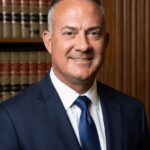
John M. Brandon (Former Prosecutor)
 Jon M. Brandon, Of Counsel, is a gifted, award-winning criminal trial lawyer and federal criminal defense lawyer who has spent his career in a courtroom trying complex, high-profile cases. Mr. Brandon was a top prosecutor at one of the largest district attorney offices in the nation, where he also worked as a cross-sworn federal prosecutor (Special Assistant US Attorney) on a large RICO matter.
During his 15-year tenure as a prosecutor in California, Mr. Brandon tried dozens of high-profile trials. He has tried more than 80 trials to verdict. He established himself as an extraordinary white collar trial attorney by winning some of the most serious and complex murder cases statewide. Mr. Brandon’s passion for representing individuals, businesses, and organizations thrust into investigations or litigation is apparent in his meticulous case preparation, client-centered approach, insider knowledge, and trial skills. He works tirelessly to ensure every client receives top-notch advocacy and a formidable defense. Read More.
James M. Allen Counsel (White Collar Defense)
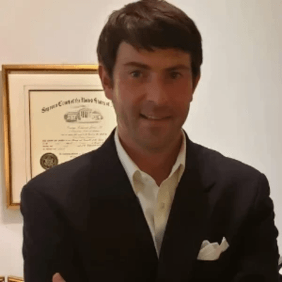 James M. Allen, Of Counsel to Watson & Associates, LLC, is a committed federal white collar criminal defense attorney with experience handling a range of complex matters at the trial and post-conviction levels.
His background includes defending clients in both state and federal forums, with a growing emphasis on federal white collar criminal defense.
As a white collar crime attorney, he maintains a strong professional interest in matters involving government contract fraud, SBA investigations, and regulatory enforcement, and is well-versed in the legal frameworks and defense strategies that shape those cases. James brings a measured, thoughtful approach to every case, prioritizing clarity, strategic planning, and strong client communication.
Wise D. Allen Counsel (Criminal White Collar Defense)
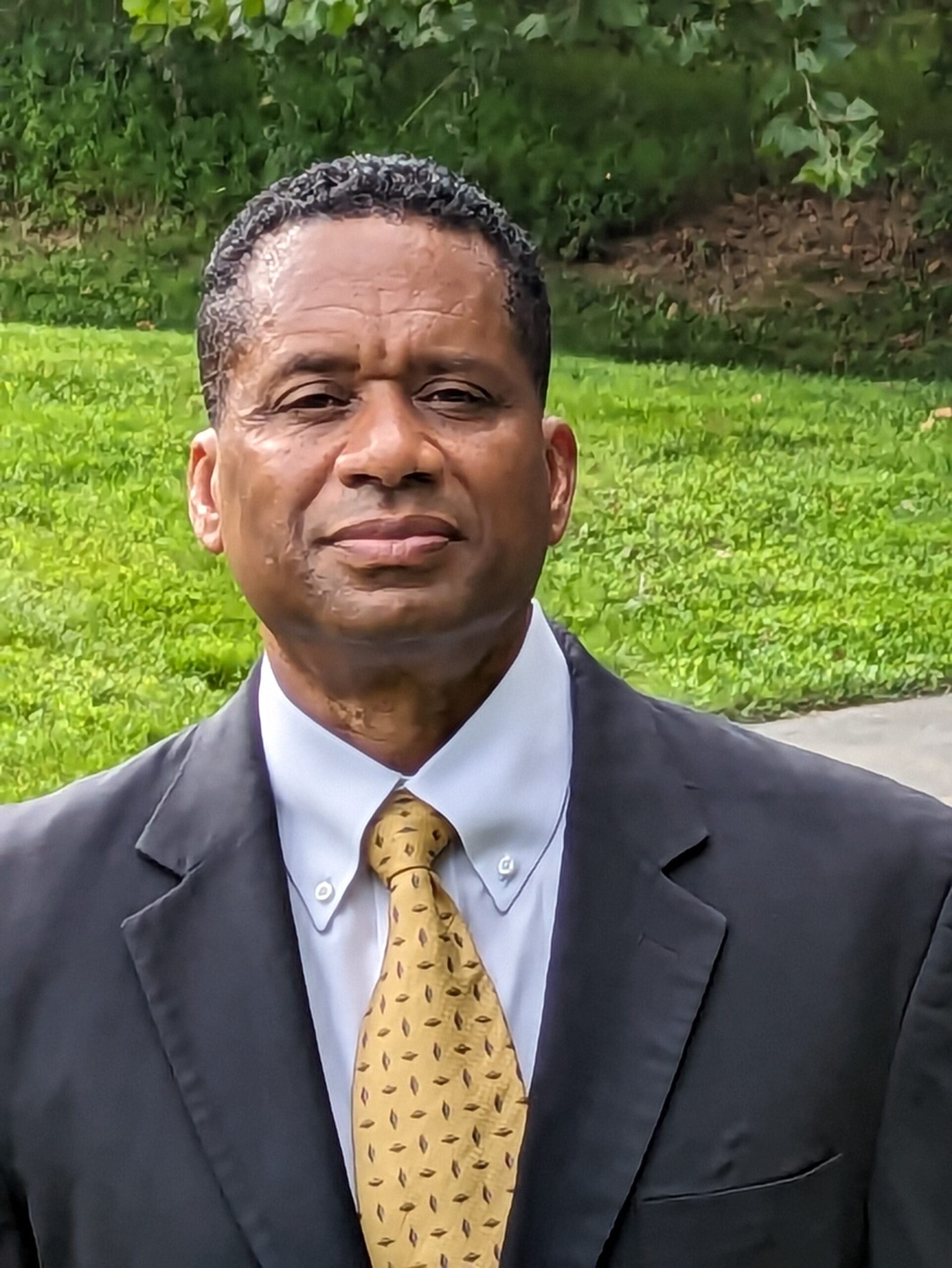 Wise D. Allen, Esquire , Counsel, is a former Veteran Lieutenant Commander Judge Advocate for the United States Military. He also has extensive knowledge and experience in resolving corporate defense and litigation in vast international and national legal issues.
He brings a wealth of successful experience to government contractors seeking defense counsel in the various areas of procurement fraud, international contracting, False Claims Act defense, and more.
Mr. Allen’s federal litigation experience as a former appellate attorney representing the United States and federal attorney for defendants in trials that led to his clients receiving overwhelmingly favorable outcomes in contested issues and obtaining non-contested resolutions. Read more..
For a FREE Initial Consultation, Call 1.866.601.6618 and Speak to Mr. Watson
START DEFENDING YOUR CASE NOW — Speak with a Federal Defense Lawyer Today
Criminal Procurement Fraud Statutes
Criminal exposure most often arises under:
-
18 U.S.C. § 1031 (major fraud against the United States) for schemes over $1,000,000.
-
18 U.S.C. §§ 1341 and 1343 (mail and wire fraud) for schemes using mail or electronic communications.
-
18 U.S.C. § 371 (conspiracy), the bribery and gratuities statutes, and the Procurement Integrity Act.
The same set of facts can, in the government’s view, support both civil procurement fraud allegations and criminal charges. The distinction usually turns on their assessment of intent, harm, and deterrence. This is why your defense team must include government contract white collar defense lawyers who understand procurement rules and white collar practice simultaneously.
Personal Exposure for CEOs and Executives
Procurement fraud investigations routinely reach beyond the entity. Under the False Claims Act and criminal statutes, individuals who caused or knowingly participated in the submission of false claims can be personally liable.
For CEOs and senior executives, this can mean:
-
Being named personally in a civil False Claims Act complaint or intervention.
-
Facing indictment for major fraud, mail/wire fraud, conspiracy, bribery, or false statements.
-
Exposure to forfeiture and restitution orders affecting personal assets, including investment accounts and real estate.
A serious government contractor fraud attorney will address this two‑level reality openly: protecting the enterprise while also planning for the possibility that the government will target individuals. Those strategies should align where possible and diverge only with full understanding of the consequences.
Can the Government Freeze Your Assets in Criminal Procurement Fraud Cases?
Yes. In criminal procurement fraud cases, the government can seek to restrain or seize assets it alleges are traceable to the offense or necessary to satisfy potential forfeiture.
This can take the form of:
-
Seizure warrants directed at bank accounts or receivables.
-
Lis pendens or similar encumbrances on real property.
-
Restraint of assets pre‑trial, limiting the company’s ability to operate or fund its defense.
For a CEO, the real‑world implications are immediate: payroll, debt service, and ongoing performance of existing contracts may all be jeopardized. Procurement fraud attorneys and government contract white collar defense lawyers must respond quickly, challenging overbroad seizures, negotiating carve‑outs for operations and defense costs, and incorporating financial constraints into any resolution strategy.
Why You Need Procurement Fraud Attorneys—Not Just Criminal Defense Lawyers
Generic white collar experience is important. In procurement fraud cases, it is not sufficient. Most allegations are hybrids: they sit at the intersection of procurement rules and criminal or civil enforcement. A lawyer who understands only one side leaves the other uncontested.
You need:
-
Procurement fluency. Counsel who can explain FAR and DFARS clauses, SBA program rules, GSA and trade obligations, and agency practices, and who can use those to undercut procurement fraud theories.
-
False Claims Act and investigation experience. Lawyers who have handled CIDs, inspector general investigations, DOJ negotiations, and qui tam matters in the government contracts space.
-
Integrated white collar capability. Government contract white collar defense lawyers who can handle subpoenas, grand jury practice, proffers, and trial in cases where procurement fraud allegations are part of a broader scheme.
Watson & Associates, LLC deliberately combines these skill sets. The firm’s federal procurement fraud attorneys and government contractor fraud attorneys focus on federal contracting—not as a sideline, but as the central context in which white collar risk arises.
Facing a Procurement Fraud Investigation? Our Former Federal Prosecutors Can Protect Your Business and Your Freedom in Whistleblower Cases.
Types of Procurement Fraud Cases Watson & Associates, LLC Handles
The firm’s experience in procurement fraud and government contractor defense spans a wide range of enforcement theories.
False Claims Act and Government Contractor Fraud
-
Civil and criminal False Claims Act cases involving cost mischarging, defective pricing, and “defective product” allegations.
-
Qui tam defense where relators allege systemic procurement fraud in small business programs, schedule contracts, or complex service contracts.
Small Business, HUBZone, SDVOSB, and 8(a) Fraud
-
Alleged front or pass‑through entities for SDVOSB, HUBZone, and 8(a) awards.
-
SBA affiliation, control, and principal office disputes that DOJ or SBA OIG treat as procurement fraud.
-
Parallel SBA administrative actions and False Claims Act litigation.
GSA Schedule, BAA/TAA, and Country‑of‑Origin Cases
-
GSA and VA schedule investigations into pricing disclosures, discount relationships, and Most-Favored-Customer obligations.
-
Buy American Act and Trade Agreements Act allegations that products were misclassified or misrepresented in origin.
-
Parallel civil and criminal investigations are tying trade compliance to procurement fraud theories.
Procurement Integrity Act, Bribery, and Source‑Selection Misconduct
-
Alleged violations of the Procurement Integrity Act (41 U.S.C. § 2101 et seq.) involving source selection information or conflicts of interest.
-
Bribery and gratuities allegations tied to entertainment, employment discussions, or other interactions with government officials.
-
Source selection challenges in which procurement fraud allegations surface alongside bid protests or debriefings.
START DEFENDING YOUR CASE NOW — Speak with a Federal Defense Lawyer Today
Bid Rigging, Collusion, and Antitrust in Government Contracting
-
Allegations of bid rotation, complementary bidding, or market allocation in federal procurements.
-
Parallel Sherman Act and False Claims Act exposure in large acquisition programs.
-
Coordination with antitrust counsel where required.
Across these categories, Watson & Associates, LLC’s government procurement fraud attorneys and government contractor fraud defense lawyers are engaged from the earliest investigative steps through trial where necessary.
Washington DC & Nationwide Procurement Fraud Defense & False Claims Act Lawyers
Our federal False Claims Act defense and government procurement fraud lawyers are available 24/7 for contractors and CEOs inAlaska, Arizona, Arkansas, California government contractor fraud lawyer, Colorado, Connecticut, Delaware, Florida, Georgia, Guam procurement fraud lawyers, Hawaii, Illinois, Indiana, Kansas, Louisiana, Maine criminal defense, Maryland federal procurement fraud lawyers, Massachusetts, Michigan federal healthcare fraud lawyers, Minnesota healthcare fraud attorneys, Mississippi oklahoma government contracts fraud attorney, Missouri, Montana, Nebraska, Nevada, New Hampshire defense lawyers, New Mexico, New York, North Carolina, Ohio government contracts fraud lawyer, Oklahoma government contracts fraud lawyer, Pennsylvania, Rhode Island, South Carolina, Tennessee, Texas, U.S. Virgin Islands, Utah, Vermont, Virginia government contracts fraud lawyer Washington, Washington DC False Claims Act Procurement Fraud defense lawyer, West Virginia, Wisconsin pharmaceutical fraud defense lawyer, and Wyoming. Looking for afraud white collar crime lawyer near me?
Our law firm Can represent clients in construction,, services contract providers, and CEOs including Anchorage, AK; Atlanta, GA; Austin government contractor fraud lawyer, TX; Chicago, IL; Baltimore defense contractor fraud lawyer; Colorado Springs government contract fraud lawyers , CO; Dallas, TX; Denver, Colorado; Indianapolis, IN; Las Vegas, NV; Los Angeles, CA; Miami procurement fraud laweyrs, FL; Philadelphia, PA; Dallas and Houston procurement fraud attorneys, San Antonio, TX; Fort Lauderdale government contract fraud laweyrs, FL; San Diego procurement fraud attorneys, CA; San Francisco government contractor fraud lawyer, CA; San Jose procurement fraud defense lawyer, CA; Santa Clara, CA; and Tampa, FL.
START DEFENDING YOUR CASE NOW — Speak with a Federal Defense Lawyer Today
Call Watson & Associates’ Government Procurement Fraud Attorneys Today
To speak with our government procurement fraud attorneys, call Watson & Associates at 1-866-601-5518 for a Free Initial Consultation or contact us online. Speak to Theodore Watson.