
Federal Healthcare Fraud Defense Attorneys
Nationwide Federal Lawyers. Federal Cases Only. Former DOJ Prosecutors on Your Team.
 Watson & Associates, LLC represents physicians, healthcare executives, and healthcare businesses across the United States in federal healthcare fraud investigations, indictments, and trials — and nothing else. We do not handle state cases, DUIs, or general criminal defense. If your matter is a federal healthcare fraud matter, this is the specific problem our firm exists to solve.
📞 Call 1.866.601.5518 — Speak directly with Theodore Watson. Our lines are open 24/7. No cost, no obligation.
DOWNLOAD: The Federal Healthcare Fraud Defense Checklist — What to Do in the First 48 Hours
Watch: What to Do the Moment You Learn You’re Under Investigation
What CEOs Must Do When Facing Healthcare Fraud Investigation
Healthcare Fraud Defense for CEOs | Avoid These Critical Mistakes!
The Team Overseeing Your Federal Healthcare Fraud Case
A Team That Has Been on the Other Side
Theodore Watson is a former federal agency executive admitted to the Supreme Court of the United States. Our Of Counsel team brings depth that few defense firms can match:
Theodore P. Watson — National Practice Leader
 Former federal agency executive, 23+ years of federal practice
- Admitted to the Supreme Court of the United States
- Leads all False Claims Act, Medicare fraud, and federal healthcare fraud matters nationwide
Chris Mancini — Of Counsel (Former DOJ Prosecutor)
 45 years of legal experience
- Former AUSA, Southern District of Florida —
- Deputy Chief of both the Criminal and Civil Divisions
- 45-year record advising and representing corporate and individual clients
Carolyn L. Oliver — Of Counsel (Former DOJ Prosecutor (California primary)
 40+ years of federal legal experience
- Former AUSA, Major Frauds Section, U.S. Attorney’s Office for the Southern District of California
- Prosecuted the exact types of complex healthcare fraud cases she now defends
Robert “Bob” Ayers — Of Counsel (Corporate Defense Attorney)
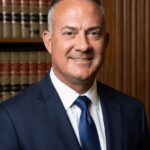 20+ years in high-stakes federal cases
- Represents corporate executives, public officials, and in-house counsel in fraud and financial crime matters
- Guides clients from quiet internal investigations through trial with focus and discretion
Wise D. Allen — Counsel Federal Criminal Defense Attorney
 Former Veteran Lieutenant Commander Judge Advocate, United States Military
- Former federal appellate attorney representing the United States
- Extensive experience in federal litigation, False Claims Act defense, and international contracting
These are not attorneys who transitioned from state practice. They built their careers in the federal system. When they tell you how DOJ prosecutors think and how OIG investigators build healthcare fraud cases — they are speaking from direct experience on that side of the table.
When we tell you that our team has been on the other side of these cases, we mean it precisely. They have stood in front of federal grand juries presenting evidence against healthcare providers. They have negotiated with DOJ Civil Fraud Section attorneys. They have prosecuted Anti-Kickback Statute violations. They know the playbook because they ran it.
📞 Call 1.866.601.5518 to speak with a member of this team today.
Answer This First: What Just Happened to You?
Federal healthcare fraud defense attorneys get one version of the same question, asked a dozen different ways: “I got this document — what does it mean, and what do I do right now?” Here’s the direct answer, based on what you’ve received:
- “I got a letter saying I’m a ‘target’ of an investigation.” → This is the most serious pre-charge status. The government believes it already has enough evidence to seek an indictment.
- “I received a grand jury subpoena or Civil Investigative Demand (CID).” → Do not respond to it yourself. A CID specifically signals a False Claims Act whistleblower case may already be sealed against you.
- “FBI or HHS-OIG agents showed up at my office or home.” → You are not required to speak with them. Say only that you are retaining counsel.
- “CMS, a MAC, RAC, or UPIC sent me an audit demand.” → This may look administrative, but audits are a common on-ramp to a criminal referral.
- “I haven’t received anything, but I think my billing patterns might draw scrutiny.” → This is the best possible time to call — before contact, while your options are widest.
Whichever situation applies to you, the next right step is the same: do not respond, explain, or produce documents before speaking with a federal healthcare fraud defense lawyer. Call 1.866.601.5518 — Theodore Watson will tell you, specifically, what your document means and what happens next.
The Federal Statutes Behind Every Healthcare Fraud Case
18 U.S.C. § 1347, False Claims Act, Anti-Kickback Statute, Stark Law, Medicaid Fraud, Mail/Wire Fraud/Money Laundering. This content is accurate, well-organized, and a genuine ranking asset. Tighten the prose by roughly 15% to improve pace; no structural changes needed.
Suggested edit for the § 1347 section opening (keyword-variant insertion):
As federal health care fraud lawyers, we’ve found the intent element — “knowing and willful” — is the central battlefield in virtually every case we defend. Billing errors, coding misunderstandings, and good-faith disagreements about medical necessity are not fraud. The government must prove you knew the conduct was wrong and chose to do it anyway.
Suggested edit for the Medicaid Fraud section opening:
As federal medical fraud lawyers handling both the federal and state tracks of a Medicaid case simultaneously, we’ve seen how quickly a single billing dispute can become two parallel investigations. Medicaid fraud investigations are uniquely dangerous because they operate on two enforcement tracks at once…
Who We Represent — And Who We Don’t
We represent, nationwide: Physicians and physician groups, hospital executives and health system leadership, pharmacists and pharmacy operators, home health and hospice operators, DME and O&P suppliers, laboratory owners and directors, telemedicine and telehealth companies, healthcare billing and revenue cycle companies, behavioral health and substance use treatment providers, skilled nursing and long-term care operators, and the nurse practitioners, PAs, and clinical staff swept into these investigations alongside them.
What we handle: Federal healthcare fraud investigations, indictments, and trials only — Medicare fraud, Medicaid fraud (federal track), False Claims Act (civil and criminal), Anti-Kickback Statute, Stark Law, and OIG exclusion proceedings.
What we don’t handle: State-only criminal matters, personal injury, family law, or general criminal defense unrelated to federal healthcare enforcement. If your matter turns out to be state-only, we’ll tell you that directly in your first call — not after billing you to find out.
This focus is why our team includes former DOJ prosecutors and Assistant U.S. Attorneys rather than general criminal defense attorneys who occasionally take a healthcare case. It is what we do, not one of twenty things we do.
42 U.S.C. § 1395nn — The Stark Law (Physician Self-Referral)
The Stark Law is categorically different from the Anti-Kickback Statute in one critical respect: it is a strict liability statute. The government does not need to prove that anyone intended to violate the law. If a prohibited financial relationship exists between a physician and an entity to which the physician refers Medicare patients for designated health services — and no applicable Stark exception covers the arrangement — violations have occurred, full stop.
| Stark Violation Consequence | What It Means in Practice |
| Denial of all related claims | CMS refuses payment for all claims submitted under the prohibited referral relationship |
| Repayment of all received amounts | Every dollar received under a prohibited referral arrangement must be returned — regardless of whether the services were actually provided |
| Civil penalties up to $15,000 per claim | Applied per individual claim submission — in high-volume practices, total penalties are catastrophic |
| Exclusion from federal programs | Cuts off the ability to bill Medicare and Medicaid — effectively ends a medical career |
| DOJ referral for FCA prosecution | Stark violations automatically generate False Claims Act exposure — treble damages on top of everything else |
Stark Law defense requires a forensic review of every financial arrangement — employment contracts, medical director agreements, space leases, equipment rentals, service contracts, joint ventures — against the statute’s designated health services list, the compensation standards, and the available exceptions. Many Stark issues are resolvable at the investigation stage before the government forces formal repayment demands — but only if counsel is engaged early enough to identify and cure the arrangement, or to assess whether voluntary self-disclosure is strategically appropriate.
31 U.S.C. §§ 3729–3733 — The False Claims Act (FCA)
 The False Claims Act is the federal government’s primary civil enforcement tool against healthcare billing fraud. It is also the statute that funds the most sophisticated investigations you will ever face — because it allows private whistleblowers to file qui tam lawsuits on the government’s behalf and collect 15 to 30 percent of any recovery.
This means a former employee, a disgruntled partner, a competitor, or even a patient may have already filed a sealed lawsuit against your practice. You would not know. The government investigates in secret, sometimes for years, before deciding whether to intervene and unseal the case.
| FCA Exposure Type | Amount / Consequence |
| Treble damages (civil) | 3x the alleged false claim amount — in high-volume practices, this reaches tens of millions |
| Per-claim civil penalties | $13,946 to $27,894 per false claim (2024, adjusted annually for inflation) |
| Criminal exposure (§ 287) | Up to 5 years per false claim submitted to the government |
| Healthcare fraud (§ 1347) | Up to 10 years per count — often charged alongside FCA civil case |
| OIG exclusion | Mandatory on conviction; permissive on adverse findings — cuts off all federal program revenue |
| Corporate Integrity Agreement | 5-year federal compliance monitoring, costly independent review organizations |
A critical distinction: the FCA’s ‘deliberate ignorance’ standard means you do not need to have personally known about false claims to face civil liability. If you created a billing environment where you should have known — and a court determines you deliberately avoided knowing — you can be held liable even without direct knowledge. This is why we assess your compliance systems, supervision structures, and documentation practices as part of every defense, not just the billing records themselves.
42 U.S.C. § 1320a-7b(b) — The Anti-Kickback Statute (AKS)
The Anti-Kickback Statute is the most broadly applied federal healthcare fraud statute in physician and health system prosecutions. It prohibits knowingly and willfully offering, paying, soliciting, or receiving anything of value — directly or indirectly, overtly or covertly — to induce or reward referrals of items or services reimbursable by any federal healthcare program.
The breadth of ‘anything of value’ is not a metaphor. Federal prosecutors have applied the statute to restaurant meals, speaking honoraria, consulting agreements, equity interests, below-market lease arrangements, free staff services, and travel reimbursements. If a financial arrangement touches a federal program referral, it can be an Anti-Kickback Statute violation.
- Criminal: Each violation is a felony — up to 10 years in federal prison per count
- Civil: Every claim tainted by a kickback becomes a False Claims Act violation — treble damages plus per-claim fines
- Exclusion: Mandatory exclusion from Medicare and Medicaid upon conviction
- Reverse false claims: Retention of overpayments received through kickback arrangements constitutes a separate FCA violation
The Safe Harbor Defense:
The AKS includes regulatory safe harbors — specific arrangement structures that are fully exempt from prosecution if properly structured. Safe harbors exist for bona fide employment relationships, personal services contracts, space and equipment rentals, investments in ambulatory surgical centers, referral services, and more. Many providers are investigated for arrangements that would have been fully protected under a safe harbor — if the arrangement had been properly documented and structured before the government started asking questions. Identifying applicable safe harbors and building the evidentiary record around them is one of the most powerful tools available to an anti-kickback defense lawyer.
Medicaid Fraud — The Multi-Jurisdictional Threat
Medicaid fraud investigations are uniquely dangerous because they operate on two enforcement tracks simultaneously. Medicaid is jointly funded by the federal government and individual states, which means federal criminal and civil jurisdiction and state criminal and civil jurisdiction both apply to the same alleged conduct. The federal False Claims Act applies to the federal share of Medicaid payments. Most states also have their own False Claims Acts with independent damages provisions. State Medicaid Fraud Control Units work in joint operations with the DOJ and HHS-OIG, creating coordinated multi-jurisdictional pressure that can be extraordinarily difficult to navigate without counsel who understands both tracks.
Common Medicaid fraud allegations we defend as medicaid fraud attorneys:
- Billing for services not rendered to Medicaid beneficiaries
- Upcoding and unbundling — billing higher codes than performed, or splitting bundled procedures
- Phantom billing — creating records for patients who never received care
- Provider enrollment fraud — misrepresenting credentials or ownership to obtain Medicaid enrollment
- Personal care attendant (PCA) fraud — billing for services performed by unqualified personnel or not performed at all
- Pediatric and behavioral health billing fraud — a significant enforcement priority in multiple states
- Long-term care and nursing home fraud
- Kickback arrangements connected to Medicaid patient referrals
18 U.S.C. §§ 1341, 1343 & 1956 — Mail Fraud, Wire Fraud & Money Laundering
Federal prosecutors never file a single-count healthcare fraud indictment if they can help it. Every electronic claim submission is a potential wire fraud count (18 U.S.C. § 1343 — up to 20 years per count). Every paper claim or mailing is a potential mail fraud count (18 U.S.C. § 1341 — up to 20 years per count). Any financial transaction involving proceeds of the fraud is a potential money laundering count (18 U.S.C. § 1956 — up to 20 years). Conspiracy under 18 U.S.C. § 371 or § 1349 allows the government to charge individuals for conduct they did not personally commit.
A healthcare fraud practice generating 500 claims per month, prosecuted over a two-year investigation period, produces 12,000 potential wire fraud counts — each carrying a 20-year maximum. No judge will impose the theoretical maximum on a stacked indictment, but the exposure drives plea negotiation dynamics in profound ways. Understanding how stacked charges work — and how to respond to them — is one of the most important things experienced federal fraud attorneys bring to a case.
Frequently Asked Questions — Federal Healthcare Fraud Defense
Do I need a federal healthcare fraud defense lawyer, or will my regular business attorney do? {#faq-early}
A regular business or healthcare compliance attorney can be valuable for the underlying regulatory picture, but federal healthcare fraud cases are tried by federal prosecutors who do this exclusively, in front of federal judges, under federal rules of criminal and civil procedure that differ meaningfully from state practice. Bringing in federal healthcare fraud defense attorneys at the investigation stage — rather than after your existing counsel realizes the matter is beyond their scope — is consistently one of the most important decisions a provider makes in these cases.
What does it cost to hire a healthcare fraud lawyer for a federal investigation? {#faq-cost}
Fee structures vary by firm and by the stage and complexity of the matter — pre-charge investigation defense, grand jury representation, and trial defense carry different scopes of work. Watson & Associates provides a free, confidential initial consultation specifically so you can understand the likely scope and cost of your matter before making any financial commitment. Call 1.866.601.5518 to discuss your specific situation.
Can a healthcare fraud lawyer get charges dropped before an indictment? {#faq-declination}
Yes — this is called a “declination,” and it is one of the primary goals of engaging federal healthcare fraud defense attorneys during the investigation stage rather than waiting for charges to be filed. By presenting exculpatory evidence, challenging the government’s damages theory, or demonstrating a good-faith compliance program directly to the prosecutor, experienced counsel can — in the right cases — persuade the government not to seek an indictment at all. This window closes once a grand jury returns charges.
What is a Civil Investigative Demand and does it mean I’m already being sued? {#faq-cid}
A Civil Investigative Demand (CID) is issued by the DOJ in False Claims Act investigations and typically means a qui tam whistleblower has already filed a sealed lawsuit against you. You are not yet a named, public defendant — the case remains under seal while the government investigates, often for one to three years. A CID is a serious signal that requires immediate federal health care fraud lawyers, not a routine document request.
FBI agents came to my office — what are my actual rights right now? {#faq-agents}
You are not required to speak with FBI or HHS-OIG agents who appear at your office or home, even briefly, even “off the record.” You may — and should — decline to answer questions and state only that you are retaining counsel. Do not attempt to explain your billing practices, your intent, or “clear up a misunderstanding” in the moment. Anything said becomes part of the investigative record and cannot be taken back. Call a federal healthcare fraud defense lawyer before you say anything further.
What’s the difference between a Medicare audit and a Medicare fraud investigation? {#faq-audit}
An audit (from a MAC, RAC, UPIC, or ZPIC) is typically an administrative review of billing accuracy and starts as a civil, non-criminal process. A fraud investigation involves DOJ, FBI, or HHS-OIG and considers whether billing conduct was intentional. The danger is that audits routinely escalate into fraud referrals when auditors believe they’ve found a pattern rather than an error — which is why responding to an audit demand with experienced healthcare fraud lawyer guidance from the outset matters, even though it doesn’t yet feel like a criminal matter.
Nationwide Medical Defense Lawyers for Doctors, Hospitals & Healthcare Providers in All 50 States
Former Federal Prosecutors Defending Doctors Against Criminal Charges & License Suspensions – federal jurisdictions, with offices in Colorado, Florida, Houston, Los Angeles, and Washington, D.C. The law firm protects healthcare clients nationwide.
Our 18 USC 1347 federal healthcare fraud attorneys are available 24/7 for healthcare providers in Alaska, Arizona, Arkansas, Alabama healthcare fraud law firm; California healthcare fraud attorneys Colorado, Connecticut, Delaware, Florida healthcare fraud defense lawyer, Georgia, Hawaii, Illinois, Indiana, Kansas, Louisiana, Maine criminal defense, Maryland healthcare fraud attorneys criminal defense lawyers, and federal medical fraud defense lawyers, Massachusetts, 18 USC 1347 Michigan federal health care fraud lawyers Minnesota healthcare fraud defense attorneys, Mississippi, Missouri, Montana, Nebraska, Nevada, New Hampshire healthcare fraud attorneys, New Mexico, New York, North Carolina, Ohio, Oklahoma, Pennsylvania, Rhode Island, South Carolina, Tennessee, Texas healthcare fraud defense lawyer, U.S. Virgin Islands, Utah healthcare fraud defense lawyer, Vermont, Virginia, Washington, Washington DC HealthCare fraud attorneys and False Claims Act defense lawyer, West Virginia, Wisconsin pharmaceutical fraud defense lawyer, and Wyoming healthcare fraud lawyer. Looking for federal healthcare fraud lawyer near me?
Our law firm Can represent clients and assist federal healthcare providers, manufacturers, hospitals, providers, and CEOs including Anchorage, AK; Atlanta, GA; Baltimore health care fraud attorney,, MD; Austin, TX; Chicago, IL; Colorado Springs healthcare fraud attorneys, CO; Dallas healthcare fraaudcriminal defense attorneys healthcare fraud, TX; Denver, Colorado; Indianapolis, IN; Las Vegas, NV; Los Angeles, CA; Miami, FL; Philadelphia, PA; Dallas healthcare fraud defense attorneys and Houston healthcare fraud defense attorney, San Antonio, TX; Fort Lauderdale health care fraud False Claims Act defense attorneys, FL; Sacramento 18 USC 1347 federal healthcare fraud attorneys, San Diego healthcare fraud defense lawyer, CA healthcare fraud criminal defense attorneys healthcare fraud; San Francisco federal medical fraud lawyers, CA; San Jose federal healthcare fraud attorneys, CA; Santa Clara, CA; and Tampa, FL.
▶ CALL 1.866.601.5518 — SPEAK WITH THEODORE WATSON — NO COST CONSULTATION ◀
Healthcare Providers and Organizations We Represent Nationally
- Physicians and physician group practices — primary care, specialists, and multi-specialty groups
- Hospital systems, health networks, and hospital executives and C-suite leadership
- Home health agencies, hospice organizations, and their operators and executives
- Pharmacists, pharmacy operators, compounding pharmacies, and pharmacy benefit managers
- Clinical and diagnostic laboratories and laboratory directors
- Durable medical equipment (DME) and orthotics and prosthetics (O&P) suppliers
- Pharmaceutical manufacturers, medical device companies, and their executives
- Mental health, behavioral health, and substance use disorder treatment providers
- Telemedicine companies, telehealth platforms, and virtual care providers
- Healthcare billing companies, revenue cycle management firms, and third-party billers
- Nurse practitioners, physician assistants, and licensed clinical staff
- Physical, occupational, and speech therapy practices and group providers
- Ambulatory surgical centers, outpatient facilities, and urgent care networks
- Skilled nursing facilities, long-term care providers, and assisted living operators
- Community mental health centers and federally qualified health centers (FQHCs)
Contact Our Nationwide Federal Healthcare Fraud Attorneys and Criminal Defense Lawyers
Every Decision from This Point Matters. For a FREE Initial Consultation, call 1.866.601.6618 and speak to Mr. Watson. When you’re under federal investigation, time is not on your side.
If you are ready to hire a federal healthcare fraud criminal defense lawyer, we are ready to help. Contact us online or Call us today to schedule a confidential consultation. We are the federal healthcare fraud attorneys you need to protect your future.
Or download our free Federal Healthcare Fraud Defense Checklist →